




Misophonia: Sound Triggers, Symptoms, and Support
Misophonia is more than just disliking certain sounds. For some individuals, the emotions brought on by it can be so extreme…
Assistive Technology for ADHD supports people to live more productive lives. Since people with ADHD have interest-based nervous systems, they’re more likely to struggle to pay attention in the same ways neurotypical people would. Different types of Assistive Technology for ADHD can help overcome these challenges which we’ll explore in this post.

ADHD is a clinical neurodivergence that affects the executive functioning of a person’s brain. Around 5% of the adult population has ADHD, although estimates suggest 80% of people in the UK who have ADHD don’t know it. ADHD has three different presentations including Hyperactive/Impulsive, Inattentive, and Combined – which is a mixture of both.
Due to differences in the prefrontal cortex, people with ADHD experience differences across the following executive functions:
So what are some of the key ways Assistive Technology for ADHD helps people with this type of neurodivergence be productive at work and in study?
Assistive Technology for ADHD can reduce distractions for people with ADHD in a variety of ways. Studies show almost 90% of people with ADHD think distractibility is the most annoying thing to handle at work. Assistive Tech can tackle this by removing images on screens or blocking out certain sections. And productivity tools such as mind mapping and captioning software can boost comprehension and focus by qualifying conversations.
Because of differences in emotional control and working memory, some people with ADHD can be inappropriate in communication, such as blurting out words at inappropriate times. They may finish people’s sentences or zone out in conversations. Such inappropriate behaviour can create social problems that people with ADHD may not intend. Assistive Tech like VR and AR software can help to train individuals to improve these skills over time.
Many people with ADHD struggle with ordering and prioritising thoughts, tasks, and activities. Sometimes, they may feel too overwhelmed to start and may need different forms of Assistive Technology for ADHD to help them. Time management apps, calendars, productivity tools, and note-taking software can all support orderly thinking and task prioritisation.
Assistive Tech can boost innovation and creativity in many ways and people with ADHD very often have creative skills they should focus on developing. Over two-thirds of neurodiverse staff say creativity and innovative thinking are their best workplace strengths. And they’re most likely to unlock such talents at work when they receive appropriate forms of Assistive Tech.
Let’s now review the key assistive tools that are available for people with ADHD and outline some of the ways they can benefit them.
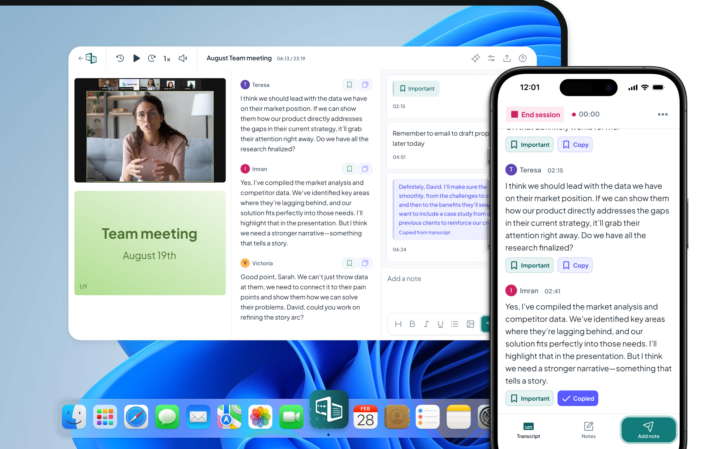
Focus, concentration, and prioritisation are all areas where captioning and note-taking software can help. It’s Assistive Technology for ADHD offering real-time captioning in meetings and lectures. Captions improve focus and concentration while transcripts reduce anxiety, stress, and masking for people with ADHD who may worry about losing track of conversations.
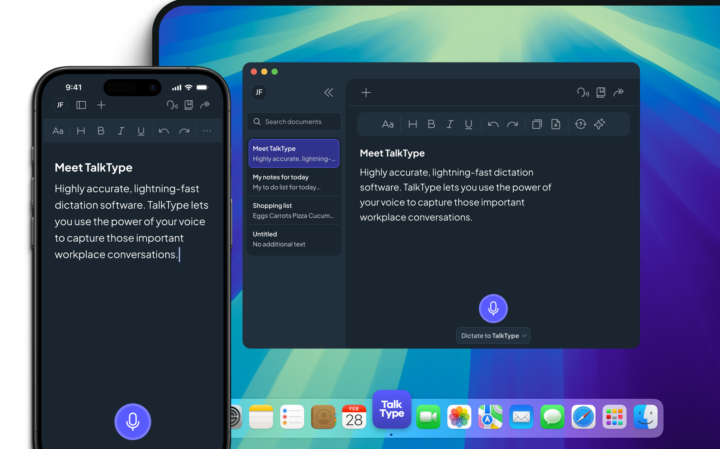
Dictation software converts spoken words into written words on a screen, which helps people with ADHD boost confidence and productivity levels. By converting spoken words into written words on a screen, people with ADHD can reduce their cognitive load from typing while boosting working memory.
Text-to-speech software converts written text into spoken words. Studies show how this form of Assistive Technology for ADHD improves reading skills and comes highly recommended for e-learning purposes. This may be because people the auditory versions help people with ADHD to focus their attention.
People with ADHD can have heightened sensory sensitivities while also becoming easily distracted by noises and busy working environments. Allowing for or providing noise-cancelling headphones can help to reduce distractions, lower anxiety, and help improve focus.
Many people with ADHD respond to visual stimuli, perhaps because of their more creative-thinking brains. Graphic organisers can help them to present information visually while promoting better organisational and time-management skills. Plus, some screen readers can magnify points on a screen to spot writing issues, missing details, or oversights that people with ADHD sometimes make.
A wide range of organisational tools and productivity apps can help people with ADHD stay on task and follow through with activities and plans. Mind-mapping tools, screen declutteres, but also captioning software also helps students and employees improve their organisation skills.
Students and employees should be able to access appropriate types of Assistive Technology for ADHD to help them with work or study. And they can do this by applying for government funding through the following schemes:
Assistive Technology for ADHD supports students with their learning in different ways and notable tools that can make the difference include:
People with ADHD can use assistive technology to improve focus, reduce anxiety and overwhelm, and help in a variety of workplace settings.

Our small but mighty team builds leading-edge software that people love. We pride ourselves on a user-led approach to product design. The voice of the customer shapes what we create and that’s exactly how great assistive tech should be made.
Misophonia is more than just disliking certain sounds. For some individuals, the emotions brought on by it can be so extreme…

Dysgraphia is a lesser-known handwriting difficulty that’s often mixed up with conditions like dyslexia and developmental coordination disorder (DCD). So, how…

There’s a lot of confusion when it comes to understanding ADHD in men. In this helpful guide, we explore different types…