
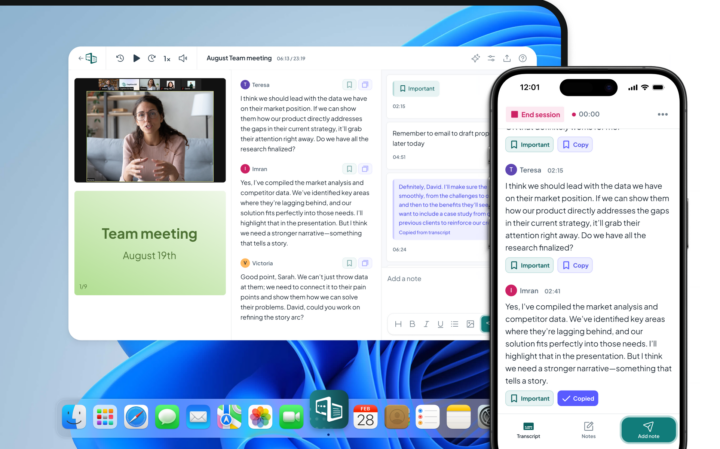


How to Take Meeting Notes When You Have ADHD
Ever wondered how some people are able to effortlessly produce meeting notes while staying focused on a call? With ADHD, note-taking…
Feeling drained, exhausted, and dreading another day at work? You might be experiencing burnout. In this post, we take a deep dive into the causes of burnout, sharing what the signs are, why it happens, and what you can do to recover.

When we use the word “burnout” in an occupational sense, we’re generally referring to a state of continuous low mood and low energy brought on by work or studies. People might also refer to this as being “checked out” or feeling like they’re “running on empty”.
While stress can leave someone feeling under pressure yet on high alert, burnout is a noticeably different feeling. It tends to make people feel drained, sluggish, detached, and unmotivated, and can develop when workplace stress continues for a long time without being properly managed.
According to the World Health Organization (WHO), there are three defining factors of burnout:
Although we tend to hear the word burnout in relation to the workplace, people also use it to describe exhaustion associated with other pressures, from caring responsibilities to education and other tasks. That feeling of “having no fuel left in the tank” is universal. It’s our body’s way of telling us that we need to slow down and take a closer look at what’s putting us under so much pressure.
Almost 40% of workers reported feeling burnt out in 2025. But what causes it? The answer isn’t the same for everyone, yet generally it happens when ongoing work or study demands become overwhelming.
A person with burnout might feel completely exhausted because:
Neurodivergence can play a role, too. When people with neurodivergent conditions enter workplaces that aren’t equipped with the right tools or teams to support them, stress and overwhelm can build quickly.
For example, an employee with ADHD might be expected to juggle lots of different tasks and deadlines despite finding it easier to work through things one task at a time. Or an autistic employee might struggle with sensory overload and unpredictable routines, yet be asked to work irregular hours in environments that exacerbate sensory difficulties.
When peoples’ natural ways of working and self-regulating are discouraged or not supported, it can exacerbate chronic stress from masking. You can understand these experiences better by taking a look at our guides to ADHD burnout and autistic burnout.
The most important thing for us to remember is that burnout isn’t a sign someone is incapable of doing their job. It might just mean that their working conditions, responsibilities, or support arrangements aren’t suitable and need to change.
Burnout symptoms can show up differently in different people. Some people may experience subtle symptoms, while others may find them more intense. If you’re worried about burnout in yourself or someone else, here are some signs to look out for:
Anxiety, depression, and other physical health conditions can also cause similar problems. So, if your symptoms are worsening or affecting everyday life, speak to your GP rather than assuming burnout is the cause.
Burnout doesn’t just appear overnight. Instead, it gradually develops in stages. Learning about these stages can be helpful for understanding how symptoms develop.
Here’s an idea of what a burnout cycle can look like:
The “honeymoon phase” is the period of optimism when starting a new job, a new role, or being given an exciting new opportunity. At this stage, you might feel eager and positive or ready to take on anything.
As time goes on, you might notice yourself becoming more tired or irritable. You might find that you struggle to switch off after work or start worrying about deadlines during your free time.
After a while, you may find yourself regularly in an exhausted state. This might make it harder to concentrate, manage your workload, or leave you feeling exhausted before the working day has even started.
Finally, the feeling of exhaustion and detachment takes over. You might feel disconnected from your responsibilities or find even simple tasks difficult to manage. This may take a toll on your wellbeing and others may notice a change in your behaviour.
Without addressing the burnout, your difficulties may continue or return. You might notice you feel better during a short break but quickly become overwhelmed when you return to the same working conditions.
Observing the stages of burnout allows you to consider where you or others might be at in the burnout cycle. Stages 2 to 5 all require some form of action, but what that action is and how comprehensive it is will depend on what the person’s needs are at the time.
As you might have guessed, it’s a lot easier to make changes during the earlier stages. Once burnout becomes persistent and takes a deeper emotional toll, bigger interventions are required to help someone get back to feeling themselves again.
If you think you might be experiencing burnout, it’s vital to be kind to yourself and recognise it as a signal for change. Burnout is your body’s way of telling you that something’s not right and that it’s time to slow down. Here are some tips to help you turn a corner:
Try to be honest about the parts of your work that are contributing to exhaustion. Are you dealing with unrealistic deadlines? Too many meetings? Difficult workplace relationships? Maybe you’re regularly working beyond your contracted hours? You don’t need to solve everything immediately. Simply identifying the biggest sources of stress can help you decide what needs to change.
When it comes to burnout recovery, rest is huge. Be strict with yourself about taking regular breaks, finishing work on time, using up your annual leave, and reducing non-essential commitments where possible. You might also want to spend time on activities that feel calming or restorative, whether that’s napping, spending time outdoors, enjoying a hobby, or having some quiet time.
It can be really hard to set boundaries when you’re so used to being available all the time. This is why it’s helpful to work on accepting boundary-setting by telling yourself exactly what your hard boundaries are. You can try setting reminders on your phone or putting physical notes on your desk. Some boundaries that can be useful for reducing burnout include:
Setting boundaries might feel uncomfortable at first, particularly if you’re used to being available all the time. But having limits doesn’t mean you’re less committed to your job.
Burnout can feel particularly intense if you’re trying to manage it all on your own. Look for a trusted colleague, manager, or HR representative to open up to and explain which responsibilities are becoming difficult and what changes might help. Maybe you need fewer competing deadlines, clearer instructions, or temporary changes to your workload. By sharing your difficulties and discussing potential changes, you’ll feel lighter and less alone with your problems.
Under the Equality Act 2010, employers in Great Britain are required to make reasonable adjustments for employees with a disability. This means making changes to your working arrangements so that you aren’t put at a disadvantage compared to your colleagues. Although burnout isn’t a medical condition or disability in itself, it can be closely linked to conditions that might be, such as ADHD, autism, anxiety, or depression. If you have an underlying condition that has a substantial and long-term effect on your day-to-day life, you may be entitled to:
Sometimes, changes at work aren’t enough. If burnout symptoms are significantly affecting your health or ability to work, speak to your GP about whether time away from work could help. For more information about fit notes, sick leave, and workplace rights, read our guide to stress leave in the UK.
There’s no fixed timeline for burnout recovery. Some people might notice improvements within weeks of reducing stress and getting adequate rest. Others may find their symptoms take several months or longer to subside.
How long recovery takes can depend on lots of things. This includes the severity of your symptoms, how long you’ve been experiencing stress, your working environment, and what support is available. The most important thing is to go at a pace that suits you. If you try to rush the process or jump back into old habits too quickly, you can end up back at square one.
Although burnout can be manageable without a trip to your GP, it’s vital to speak to a professional if you’ve tried making changes and things aren’t improving. They can explore whether another health condition might be contributing, and discuss appropriate treatment or support.
Remember, burnout doesn’t last forever. Recognising the signs and changing the conditions contributing to your stress can help you move towards recovery.
Although opinions vary, it’s generally agreed that the key differences between stress and burnout are the duration and the types of symptoms experienced. With stress, a person often feels overwhelmed and wound up, but this tends to ease once the pressure passes. In contrast, with burnout, a person might feel drained, detached, and unmotivated, with no energy left to care about the pressures they’re facing.
Burnout can last for weeks, months, or longer, depending on the individual and their circumstances. There isn’t a single established timeline for how long burnout lasts.
Yes, some people find that changes such as reduced workloads, flexible working arrangements, better boundaries, and additional support help when their burnout symptoms are identified and addressed early. However, continuing to work isn’t always the best option. If your symptoms are severe, medical advice and a period of sickness absence may be appropriate.
Burnout is recognised by the World Health Organisation as an occupational phenomenon in the International Classification of Diseases (ICD-11), but it isn’t classified as a medical condition in its own right. Yet that doesn’t mean the symptoms aren’t real or serious. Burnout can affect your health and daily functioning, and symptoms may overlap with conditions such as anxiety or depression. If you’re struggling, a healthcare professional can help assess what’s happening and recommend appropriate support.

Our small but mighty team builds leading-edge software that people love. We pride ourselves on a user-led approach to product design. The voice of the customer shapes what we create and that’s exactly how great assistive tech should be made.
Ever wondered how some people are able to effortlessly produce meeting notes while staying focused on a call? With ADHD, note-taking…

Misophonia is more than just disliking certain sounds. For some individuals, the emotions brought on by it can be so extreme…

Dysgraphia is a lesser-known handwriting difficulty that’s often mixed up with conditions like dyslexia and developmental coordination disorder (DCD). So, how…