



Misophonia: Sound Triggers, Symptoms, and Support
Misophonia is more than just disliking certain sounds. For some individuals, the emotions brought on by it can be so extreme…
RSD is quite often found in neurodivergent individuals and in particular those with ADHD and Autistic Spectrum Disorder. Let’s look further into the symptoms and how it relates to ADHD and other conditions.
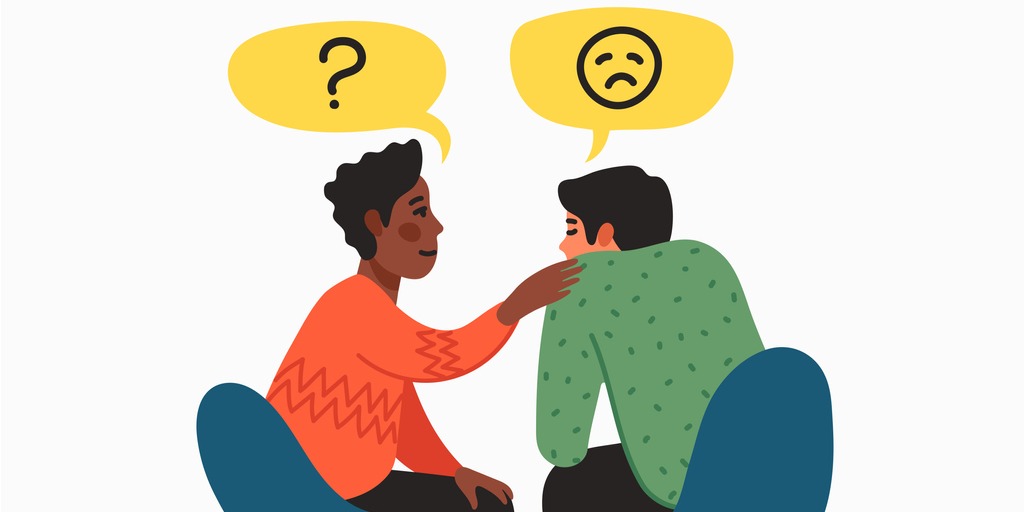
Rejection Sensitive Dysphoria (RSD) is a term introduced by Dr. William W. Dodson in 2017. It describes the mental and emotional pain some people experience when faced with real or perceived rejection from others.
As a psychiatrist specialising in ADHD and neurodivergence, Dodson recognised how many of his ADHD (Attention Deficit Hyperactivity Disorder) patients experienced extreme feelings of rejection. To explain his findings, he shared a paper on Rejection Sensitive Dysphoria and suggested RSD as a significant symptom for people with ADHD.
The word “dysphoria” stems from ancient Greek entomology. It describes a strong feeling of pain or discomfort and is not a neurodivergent condition in itself.
Some neurotypical individuals experience RSD too.
Since it’s not an official medical condition, there is no treatment for Rejection Sensitive Dysphoria on the NHS. But the prescribed medications and talking therapies used to treat or manage ADHD, ASD, or other neurodivergent conditions, can be effective.
While no-one enjoys feeling rejected, overlooked, or dismissed, people who suffer from RSD experience rejection as a form of intense pain. They can feel that a relationship with someone may end following a minor conflict. And sufferers often describe the feelings as devastating, catastrophic, and unbearable. Feelings are often episodic but can also last over an extended period.
Understanding how RSD plays out for people may be easier to do by reviewing the symptoms associated with the condition.
Since there isn’t a medical handbook that can diagnose anyone with RSD, it’s often identified within assessments for other medical conditions. Neurotypical individuals can even have RSD, which may be a consequence of a genetic component. Treatment strategies should focus on management and improving quality of life. And these may include psychotherapy, antidepressants, meditation and mindfulness, or adaptive management techniques.
The causes of RSD aren’t fully understood. Experts recommend more research into this area to determine any connection to neurodivergent conditions. It may be that individuals with RSD have different brain structures that result in emotional dysregulation. But, whichever way you look at it, RSD is not an acquired condition or neurodivergence. It’s believed to be a genetic and innate feature of someone’s biology.
While the root causes of RSD are uncertain, researchers do have clarity on what triggers RSD symptoms:
Rejection Sensitive Dysphoria is a significant challenge for those who experience it and for the people around them. Feelings can be agonising, destructive, and persistent. And their effects can have far reaching impacts on social connections, work opportunities, and individuals quality of life.
Coping mechanisms can sometimes be unhealthy or destructive. And emotional regulation may be harder for people with RSD.
So what could someone who experiences RSD do to support themselves? While there aren’t any specific medical treatments, they can consider a variety of social and emotional coping strategies.
It’s possible to gain a greater sense of control over RSD symptoms by keeping the STAR acronym in mind (Stop, Think, Act, Review). Following through on each stage is one way that could help to manage and escape from the grip of RSD.
People with RSD symptoms can feel flooded with emotion. And it’s this emotional overwhelm that can lead to negative self-talk and self-critical rumination.
One way to counter the spiral of negative emotion is to stop and remember every strength and positive quality. Someone with RSD may have achieved great things in life, overcome adversities, supported others, or taken on some challenges that others wouldn’t dare to do.
Creating a written list of every positive achievement and quality can help remind you, in the grip of symptoms, that a single negative event doesn’t reflect your whole identity or achievements.
Managing RSD involves reducing daily stressors, and using convenient tools can help. For instance, drafting communications with a dictation tool – speaking instead of typing – can ease the anxiety of writing and let someone with RSD focus on content rather than self-critique.
Engaging in regular mindfulness practice can be an effective way to reduce the intensity of your response and symptoms during triggering events. With regular mindfulness practice, people with RSD may find they can better handle emotional reactions to criticism while also finding themselves grounded enough to respond in a measured, rational, and reasonable way.
As we’ve highlighted so far, Rejection Sensitive Dysphoria is an experience of intense, overwhelming, and sometimes debilitating emotional reactions to being either rejected or perceiving rejection from others.
Of course, people who don’t have RSD or a neurodivergent condition can still experience feelings of rejection. But their response to any actual or perceived rejection will be less pronounced.
Dr William W. Dodson coined the phrase Rejection Sensitivity Dysphoria as a way to highlight a trend he found in patients with ADHD. His findings suggested 98-99% of adolescents and adults with ADHD also acknowledged an experience of RSD. And a third of them listed RSD as the symptom that impaired them the most.
At the time of his 2016 paper, Dodson linked RSD exclusively to ADHD. But further exploration reveals many people without ADHD relate to RSD too.
RSD was first discovered by Dodson as a symptom found in people with ADHD. But people with RSD, ADHD, Autism, and several other types of neurodivergence can display characteristics of a sensitive nervous system. And these sensitivities can manifest in different and overlapping ways.
ADHD emotional sensitivity is one manifestation. But so is having an ‘interest-based’ nervous system, according to Dodson. This is where individuals with ADHD feel inclined to focus intensely on something that interests them.
Another symptom of ADHD is emotional hyperarousal. This is a cluster of symptoms or behaviours showing a high degree of emotionality that clinicians can use to identify people with ADHD. In general, individuals with ADHD have thoughts and emotions that are more intense than the average person. And so Rejection Sensitive Dysphoria is a further indicative symptom of the sensitive nervous system of people with ADHD.
Emotional dysregulation is when someone experiences intense emotions and finds it hard to manage them or acts on them in appropriate ways. This may include impulsive behaviour, an inability to manage behaviours, trouble with decision making, and a lack of emotional awareness.
A person with emotional dysregulation would need to have a persistent sense of being unable to manage their emotions. Or having emotions that last for a long period of time, or lead to high levels of shame, anger, or depression.
While people with ADHD almost always experience RSD, those with autism can also experience these symptoms. Also, ADHD and autism can be co-occurring, in which case the chances of experiencing RSD are higher.
Not every person with autism experiences RSD. But individuals on the autism spectrum can find it hard to read inferences in body language, demeanor, and social cues. People with ASD or autism can have fast reactions and respond in extreme ways. But they may not experience the intense, incapacitating emotions and fear of rejection that comes along with RSD.
It’s possible that RSD is a symptom of autism, but not enough research exists to confirm this. Where RSD is almost always experienced by people with ADHD, someone with autism and ADHD is likely to experience RSD too. But this may be a consequence of their ADHD.
Assistive technology can be used to support and enhance communication for people at workplaces and universities. CareScribe is at the forefront of assistive technology and our products address a wide range of needs.
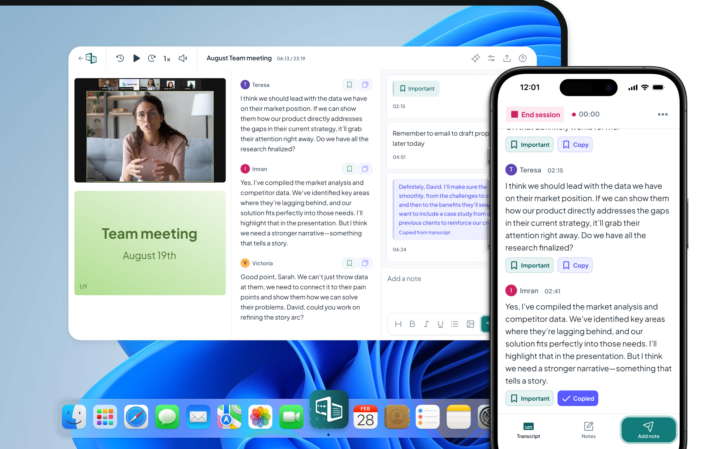
Featuring a set of custom dictionaries with live captioning and note-taking functions, Caption.Ed can add captions instantly to your meetings, lectures or seminars, either in-person or online. You can also add timestamped notes, synced to your transcript, and highlight key information so you never miss out on the important stuff.
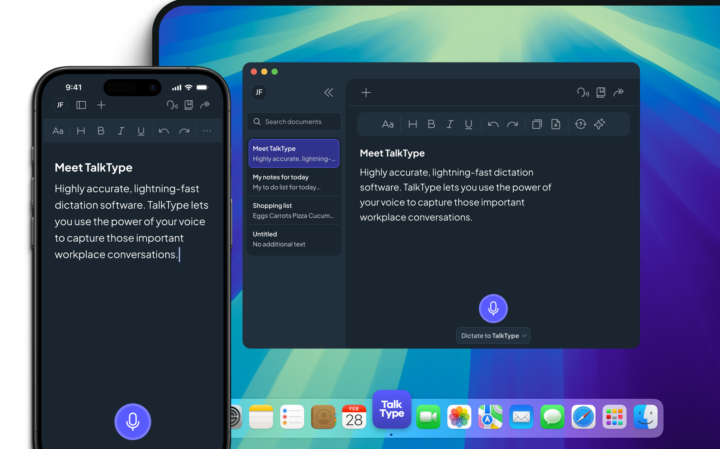
TalkType is highly accurate dictation software built for Windows, Mac, and mobile devices. Dictation software like TalkType can transform the way you work and study. As well as boosting productivity and efficiency, dictation software can provide autonomy to anyone who cannot type using traditional keyboards.
Caption.Ed and TalkType are dynamic AT tools that are transforming outcomes across many workplaces and universities.

Our small but mighty team builds leading-edge software that people love. We pride ourselves on a user-led approach to product design. The voice of the customer shapes what we create and that’s exactly how great assistive tech should be made.
Misophonia is more than just disliking certain sounds. For some individuals, the emotions brought on by it can be so extreme…

Dysgraphia is a lesser-known handwriting difficulty that’s often mixed up with conditions like dyslexia and developmental coordination disorder (DCD). So, how…

Many people with autism report finding it easier to focus on one task at a time, known as “monotropism”. While monotropism…