


Misophonia: Sound Triggers, Symptoms, and Support
Misophonia is more than just disliking certain sounds. For some individuals, the emotions brought on by it can be so extreme…
Ever feel as though your team aren’t quite achieving their true potential? That’s where employee development plans come in. We’ve created this simple guide to walk you through the ins and outs of EDPs. Discover why they’re helpful, what they should include, and how to create one yourself.

An employee development plan (EDP) is a written agreement between an employer and an employee that maps out professional growth over a period of time (usually around 6–12 months). Most commonly, an EDP is created by an employer with input from the employee. This may take place during a designated meeting or during a continuing professional development session.
An employee development plan often contains similar elements to those found in a personal development plan. It might include things like strengths and weaknesses, SMART goals, and clear action points to work on. The key difference with an EDP is that the goals and areas of focus are designed to align with the organisation’s needs, not just the individual’s.
Life at work can quickly become unfulfilling when there aren’t opportunities to upskill or develop. An EDP ensures that staff continue to feel satisfied by new challenges. It allows them to build skills they care about or explore areas of intrigue. This keeps things interesting and broadens their future opportunities.
For employers, there are also many attractive benefits. Noticed some skill gaps in your team? Instead of spending months recruiting externally (and paying a premium for it), you can build those capabilities internally. Your current staff already know how things work, they understand the culture, and they’ll be even more invested in the company’s success if you’re invested in them.
If you do decide to hire someone new, EDPs can help with this, too. When potential hires see that you’re committed to investing in employee growth, you become a far more appealing employer. It really is a win-win for everyone.
Did you know? According to Gallup, a lack of development opportunities is a common reason for leaving cited in organisations with high staff turnover. Quite often, these resignations are preventable. Employers just need to have the right conversations with staff and make development opportunities known to them.
Now you know about the many benefits, let’s explore the key components of a good EDP. Remember, a solid, strategic plan isn’t something you knock out in fifteen minutes between meetings; it requires proper thought. The direction of someone’s professional growth for the next six to twelve months is in your hands.
Skills assessment: Think carefully about the employee’s skill set. Where are they right now? What are they brilliant at? Where do they struggle? This needs to be honest but not brutal. It’s a good idea to send the employee a skills self-assessment so that they can input here, too.
Clear objectives: Vague goals like “get better at communication” are tricky to work with and can be misinterpreted. Instead, focus on specific, measurable targets that give your employee something concrete to aim for. This is where SMART goals (Specific, Measurable, Achievable, Relevant, Time-bound) actually earn their keep.
Development activities: Actions for development should be clearly defined. Ask yourself: how will they actually achieve these goals? Do they need mentoring or training courses? Try to be specific about what’s required.
Timeline and checkpoints: Any good EDP has a timeline. Without one, action points get forgotten. Consider when you’ll review your employee’s progress. You can break goals up into mini milestones and check in with them along the way.
Resources: Think about things like support, budget, and time needed. It’s not fair to your employee to create a goal that you’re unable to see through and support them with.
As we mentioned at the start, an EDP should always aim to connect individual goals back to broader company objectives. For example, if someone’s developing skills in data analysis because the organisation is moving towards more data-driven decision-making, state that explicitly. This helps the staff member to see why their growth matters beyond just their own career.
Now we’ve covered the basics, here’s how to create your very own EDP:
Effective EDPs are all about collaboration, so start by getting staff input. Find out about their passions, their career aspirations, and what brings them the most fulfilment. Then, work through a SWOT analysis with them to identify their strengths, weaknesses, opportunities, and threats. All of this information will inform the structure and direction of the plan.
You’ll also need to address performance gaps and organisational needs. Think about the passions and interests your employee has expressed and how they align with skills that are missing from the team. If their development serves both their interests and the organisation’s needs, they’ll be much more likely to commit to the plan rather than just nodding politely in the meeting.
Once you’ve had the conversation and identified the goals, write it all down properly. A verbal agreement can easily get forgotten or misremembered. Written communication gives everyone something concrete to refer back to.
Different situations call for different approaches. Although EDPs tend to cover a range of areas, here are a few types that have a specific focus:
Skill-based plans focus on building specific technical or soft skills. This might be helpful for someone in a marketing team learning SEO, or a developer picking up a new programming language.
Performance improvement plans address specific performance gaps. PIPs are more structured and often have clearer consequences, though they still benefit from a developmental rather than punitive approach.
Career development plans take a longer view, mapping out progression towards a particular role or level. These might span multiple years and include quite ambitious goals.
Leadership development plans prepare people for management or senior positions, focusing on strategic thinking, people management, and decision-making.
The type of plan you need depends on the individual, their career stage, and the overall goal for your organisation.
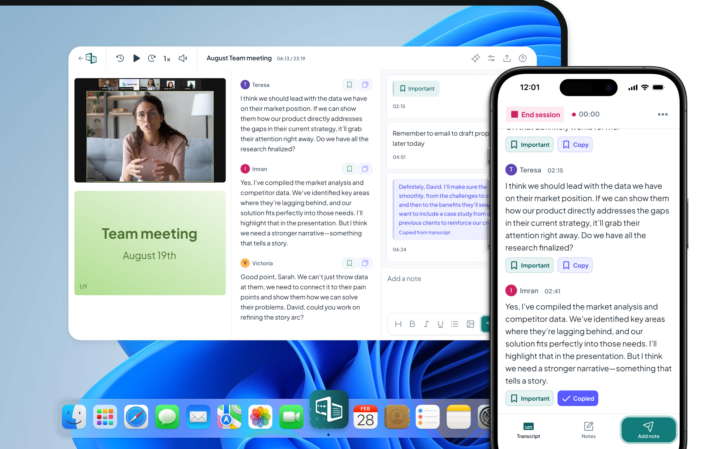
Creating an employee development plan? If you’ve booked in a 1:1 with a staff member to set goals and gather info, why not explore live captioning software like Caption.Ed? Not only does Caption.Ed remove the hassle of having to transcribe your meeting in real time, but it also takes away the time-consuming admin after. Use the all-new Auto-Fill Documents feature to take the transcription from your development meeting and format it directly into your chosen EDP template. In seconds, you’ll get a usable draft, complete with the goals discussed, action points agreed upon, and timelines set.
Intrigued? Check out the Auto-Fill Documents feature guide to find out more or book a demo to explore how it works in practice.
Ideally, both manager and employee work on it together. The manager brings an organisational perspective and knowledge of what’s needed or possible. The employee brings self-awareness, career goals, and motivation. When it’s collaborative, you create something that staff are more likely to stick to.
Not at all. If you’re being given an EDP, it usually means your employer sees potential in you and wants to invest in your growth. If it’s specifically labelled a “performance improvement plan”, the situation might be slightly different, but a standard development plan is genuinely about development, not discipline.
Always choose quality over quantity. Three to five meaningful goals are far better than ten vague ones. You need enough to create real progress, but not so many that the person feels overwhelmed or nothing gets proper attention.

Our small but mighty team builds leading-edge software that people love. We pride ourselves on a user-led approach to product design. The voice of the customer shapes what we create and that’s exactly how great assistive tech should be made.
Misophonia is more than just disliking certain sounds. For some individuals, the emotions brought on by it can be so extreme…

Dysgraphia is a lesser-known handwriting difficulty that’s often mixed up with conditions like dyslexia and developmental coordination disorder (DCD). So, how…

There’s a lot of confusion when it comes to understanding ADHD in men. In this helpful guide, we explore different types…