


Misophonia: Sound Triggers, Symptoms, and Support
Misophonia is more than just disliking certain sounds. For some individuals, the emotions brought on by it can be so extreme…
People with hearing loss can feel isolated and misunderstood. But Assistive Technology for Hearing Impaired people can help them overcome these challenges. With a broad range of Assistive Tech available, engaging with the most appropriate tools can increase productivity, lead to more autonomy, and boost earnings. So, let’s take a closer look in this post.

A range of Assistive Technology for Hearing Impaired people gives people with hearing loss or communication difficulties a chance to engage in their surroundings. Hearing loss affects around 18 million people in the UK. And many find relief through Assistive Technology (AT).
Hearing impairments range from being profoundly deaf and in need of BSL interpreters to mild hearing loss or tinnitus. So, whether it’s ALDs (Assistive Listening Devices), AAC (Augmentative and Alternative Communication), captioning software, or Alerting devices like loud sound-emitting technology, all types of Assistive Technology for Hearing Impaired people are effective.
Some challenges hearing-impaired people can face:
So what are some of the key ways Assistive Technology for Hearing Impaired people can improve lives?
AT such as ALDs, AACs, and even captioning software go a long way towards supporting deaf people to improve communication. By amplifying sound levels, enhancing sound quality, or better interpreting words, people with hearing impairments can avoid misunderstandings in communication. And they can develop positive, healthy relationships with others.
All types of Assistive Technology for Hearing Impaired work to bridge gaps for people with hearing impairments. Examples can include alerts when people call at their door or on their phone, or providing captions when meeting over Zoom or MS Teams. Around 80% of people add live captions to videoconferencing calls which gives people with hearing impairment access to the conversation.
A wide range of AT tools will fit the varying needs and requirements of people who face hearing challenges. Through appropriate tools, they gain greater independence and autonomy over their lives. In particular, employees with hearing loss can gain parity with their peers and improve work performance.
Both people with hearing loss and people without can gain confidence from AT tools. A report by RNID showed over 40% of the general population don’t feel confident communicating with deaf people. This, of course, leaves many people unaware of where they should start to bridge this communication gap.
Plus, research into the effectiveness of Assistive Technology for Hearing Impaired people shows it has a a positive psychosocial impact. Results of a study show AT improves ian ndividual’s adaptability, competence levels, and self-esteem soon after use.
In this section, we’ll look at the wide range of Assistive Technology for Hearing Impairment and offer some insights on how they can help.
ALDs are effective for people using hearing aids and cochlear implants. Around 20,000 people in the UK have a cochlear implant. And, while they won’t bring someone’s hearing back, they can stimulate the auditory nerve, recognise electrical signals as sounds, and replace damaged hair cells.
Hearing aids and cochlear implants can work in synch with other technologies:
AACs range from low-tech supportive interventions like books, pictures, or augmentative hand gestures to more sophisticated digital technologies like captioning technology. AACs are usually either aided or unaided, with high-tech portable communication tools that fix to the hip or wrist to help people with hearing loss talk to others.
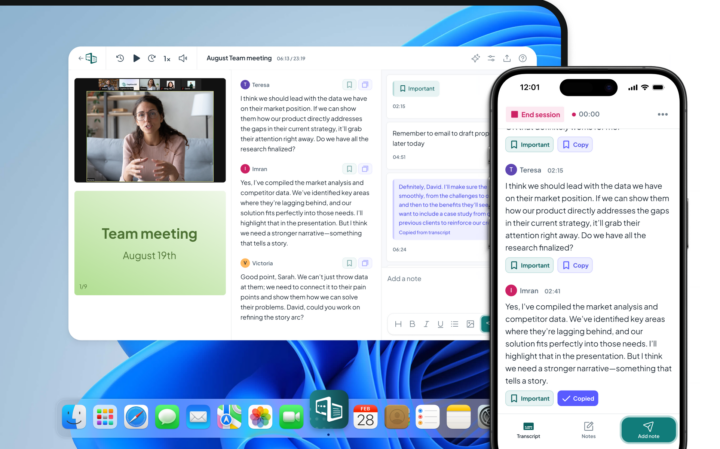
Another way to boost communication is by adding captions in videoconferencing meetings, phonecalls, and during live presentations. This opens accessibility for people with hearing difficulties, increases comprehension, and supports working memory. It can also help people with hearing loss take calls at home, decipher words, and avoid miscommunication.
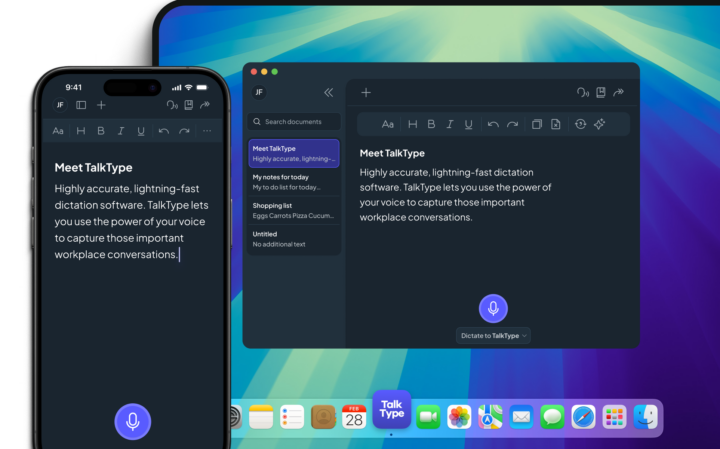
Dictation software can also overcome communication problems for people with hearing loss and aids communication as an effective form of speech-to-text technology.
Using sound, light, visual cues, vibrations, or even a combination of these, alerting and alarm devices are effective organisational tools. Examples range from wake-up alarms that use bright or flashing LED lights to horns, visual alerts, or vibrating technologies.
Vibrating pages, for instance, help people with hearing loss receive notifications of duties, instructions, or activities. Someone working on a site like construction or facilities management could benefit from vibrating pages for project updates, for instance.
Employees and students with hearing loss can access free Assistive Technology for Hearing Impaired through government funding schemes. Using these funding pots, individuals with hearing loss can apply for considerable levels of funding to support them with the most appropriate types of tech:
Some of the most effective forms of Assistive Technology for Hearing Impaired students includes the following:
People with hearing loss can use assistive technology to improve focus, reduce anxiety and overwhelm, and help in a variety of workplace settings.

Our small but mighty team builds leading-edge software that people love. We pride ourselves on a user-led approach to product design. The voice of the customer shapes what we create and that’s exactly how great assistive tech should be made.
Misophonia is more than just disliking certain sounds. For some individuals, the emotions brought on by it can be so extreme…

Dysgraphia is a lesser-known handwriting difficulty that’s often mixed up with conditions like dyslexia and developmental coordination disorder (DCD). So, how…

There’s a lot of confusion when it comes to understanding ADHD in men. In this helpful guide, we explore different types…