Your Guide to a Better Performance Review

Performance reviews can feel daunting, but they should never be overlooked – reviewing performance can be extremely helpful for everyone involved. To avoid any mishaps and ensure your performance review runs smoothly, we’ve put together this handy guide that covers top tips and advice for both managers and employees.

A person in a white shirt and black wristwatch holds their hand out, palm up, beneath a floating, semi-transparent line graph—an image that could guide a successful performance appraisal against a plain background.

What is a Performance Review?

Sometimes referred to as an “appraisal”, a performance review is a helpful evaluation of a staff member’s performance in the workplace. Led by management or HR, it’s there to identify what a staff member’s strengths and weaknesses are, as well as goals and areas for improvement. 

A key part of a performance review is a performance review meeting. During this meeting, a senior member of staff runs through the review with the employee, covering a range of performance areas – these may be tied in with a performance improvement plan or employee development plan. If anything negative or challenging needs addressing in someone’s review meeting, employers should only do so after making the issues known to the staff member beforehand. This ensures the employee doesn’t feel “caught off guard” or unprepared when receiving feedback. 

How to Prepare for a Performance Review

When it comes to performance reviews, the right prep is essential. Creating a solid plan beforehand will allow things to run smoothly and ensure both parties come away feeling listened to and confident of any actions needed going forward.

How to Write a Performance Review as a Manager

So, what’s the best way to get started?

Most managers complete a draft review before meeting with the staff member. This normally includes the employee’s strengths, areas for improvement, and goals. Acas offers lots of helpful review templates online that you might want to explore. Your review can be amended during the meeting to add the employee’s thoughts or comments.

When writing a review for your staff member, focus on the following points. You want to keep it clear, concise, and helpful:

Be specific: Try to give specific feedback instead of using vague statements. When addressing tricky topics, the last thing you want to do is tiptoe around issues and leave the staff member confused or unclear about what they’ve done wrong. For example, if your employee uses their phone too much and it distracts them from work, don’t just write: “staff member often appears distracted”. Put: “staff member often appears distracted by mobile phone”. This will remove any ambiguity.

Keep it balanced: It’s not easy to deliver negative feedback, but it usually comes off a lot better when it’s balanced with praise. Each time you highlight an area for improvement, follow up with a point of praise. This is how you deliver constructive criticism the right way, and it will make staff feel more inclined to take action.

Use clear, measurable language when setting goals: Just as you should be specific when delivering constructive criticism, you should also do the same for goal setting. Try to create SMART goals (Specific, Measurable, Achievable, Relevant, and Time-bound) to ensure aims are meaningful and actionable. 

Finish up with a plan of action: End with a forward-looking plan that motivates the employee to thrive. Use positive language and make it clear that you support them and are willing to provide any tools or resources they may need.

If you’re working on a review for a staff member and are struggling to find feedback points, go back to basics and consider your organisation’s expectations for staff. Are they punctual? Do they turn up to work with a positive attitude? Do they follow the correct procedures when reporting holidays, absences, etc.? This will help to point you in the right direction.

Helpful Performance Review Phrases You Can Use

As a manager, it’s vital that you use the right language for a performance review. Use these examples to guide you when planning comments to deliver to your employee: 

New call-to-action
  • Positive reinforcement: “(Name) consistently delivers high-quality work and meets deadlines with reliability.”
  • Constructive feedback: “(Name) is great at coming up with ideas but needs to communicate more with colleagues to help projects run more smoothly.”
  • Goal-setting: “We will focus on developing (Name)’s leadership skills by taking on a mentoring role.”
  • Acknowledgement: “(Name)’s adaptability during recent changes has made them a real asset to the team.”

These types of phrases strike just the right balance between encouragement and actionable guidance. When delivering comments during a review meeting, you might choose to ask the employee questions about these points to gauge what they think. For example, you might say, “I’ve put here that you could focus on X – what are your thoughts on this?” or “Do you think this is fair?” This will show your employee that you’re open to their viewpoint and are willing to take their feedback into account. 

What to Say in a Performance Review as an Employee

As an employee, it can be helpful to prepare a few things beforehand that you can share during your performance review meeting. Consider the following:

  • Achievements: Have you had any recent successes or made a significant contribution that you feel your manager should know about?
  • Challenges: Be honest with yourself about any areas where you’d like support or improvement.
  • Welcome feedback: Mentally prepare yourself for all types of feedback. Remember to welcome any feedback comments to show respect and a willingness to grow.
  • Career goals: Are there any specific ambitions you have that align with company objectives? If so, your manager can support you to pursue them. 

As an employee, it can be helpful to prepare a few things beforehand that you can share during your performance review meeting. Consider the following:

  • Achievements: Have you had any recent successes or made a significant contribution that you feel your manager should know about?
  • Challenges: Be honest with yourself about any areas where you’d like support or improvement.
  • Welcome feedback: Mentally prepare yourself for all types of feedback. Remember to welcome any feedback comments to show respect and a willingness to grow.
  • Career goals: Are there any specific ambitions you have that align with company objectives? If so, your manager can support you to pursue them. 

Common Pitfalls to Avoid in Performance Reviews

There are a few common pitfalls that both employees and managers should try to avoid during performance reviews.

What to avoid as a manager:

As a manager, you should try to make your staff member feel as comfortable as possible during a performance review and meeting. If your delivery is harsh, you come across as overly critical, or you don’t give the employee a chance to speak, it can break down trust and discourage the employee from trying to improve. Always be mindful, patient, and encouraging.

What to avoid as an employee: 

Employees should approach review meetings with respect. Arriving unprepared, dismissing constructive feedback, or treating the review as a formality will not only waste your manager’s time but also undermine your own development. Show enthusiasm and think carefully about what you’d like to aim for professionally. This will show your manager that you care about progressing.

Enjoy Faster and Easier Performance Reviews with Caption.Ed

New call-to-action

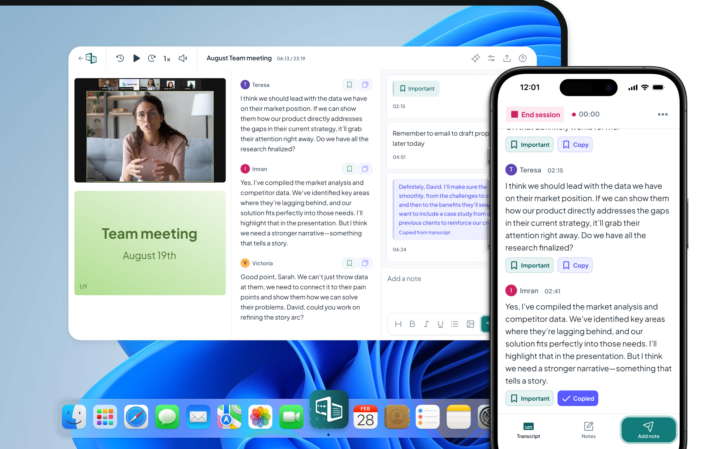
Got an upcoming performance review meeting? If you’re eager to save time and ensure everything flows seamlessly, why not use a live captioning software like Caption.Ed? Caption.Ed now has a brand-new feature that takes the transcription from your meeting and handily formats it into any template you upload. For performance reviews, this is a game-changer. It means you not only have a usable review draft in seconds, but you can also give your full attention to the discussion without getting distracted along the way. 


Curious to explore Auto-Fill Documents? Review the helpful feature guide to find out more or book a demo to see it in action.

Dr. Richard Purcell

Rich is one of the Founders and Directors here at CareScribe. Rich has a passion for healthcare and assistive technology and has been innovating in this space for the last decade, developing market leading assistive technology that’s changing the lives of clients around the globe.

Our Products

Levelling the playing field for people with disabilities.

Our small but mighty team builds leading-edge software that people love. We pride ourselves on a user-led approach to product design. The voice of the customer shapes what we create and that’s exactly how great assistive tech should be made.

A game changer in
accessibility and productivity.

Visit captioned’s website

Dictation software that
doesn’t sacrifice accuracy.

Visit TalkType’s website