



Misophonia: Sound Triggers, Symptoms, and Support
Misophonia is more than just disliking certain sounds. For some individuals, the emotions brought on by it can be so extreme…
If you regularly browse neurodivergent content online, you may have come across the slang term “tism”. In this post, we’ll look at why some autistic individuals prefer this term, who should (and shouldn’t) be using it, and how neurotypical staff can adopt inclusive language to ensure people with autism feel respected at work.
The slang term “tism” is a shortening of the word autism that’s been adopted by some individuals in the autism community. It’s most often used in casual contexts as a playful way to refer to autism.
It’s difficult to pinpoint the exact origin of “tism”; however, it appears to have emerged online and is widely associated with online memes on social media platforms like X (formerly Twitter), Reddit, and TikTok.
These days, terms like “tism” and “touch of the tism” have become common hashtags and are regularly used to categorise content based on neurodivergent-related topics. You might find them on TikTok videos promoting disability awareness, under Instagram Reels discussing autism in the workplace, or even in podcast titles about neurodiversity.
Some autistic individuals may choose to use the term “tism” because it’s a less formal way to describe autism. It may help them to connect with others in their community, share support in a relaxed way, or cope with specific challenges using lighthearted or relatable humour.
While some autistic people are happy using “tism”, it’s vital to remember that not everyone in the autistic community is comfortable with it, and some may even find it offensive. Since it’s not an accepted replacement for the word autism, it should be used with care and sensitivity.
Even if you’re close to someone who’s autistic, if you’re allistic (i.e. you’re neurotypical or neurodivergent without autism), it’s always best to ask the autistic person how they prefer to describe their experience and what language feels right to them. Avoid assumptions, and steer clear of non-clinical terms that could come across as dismissive or hurtful.
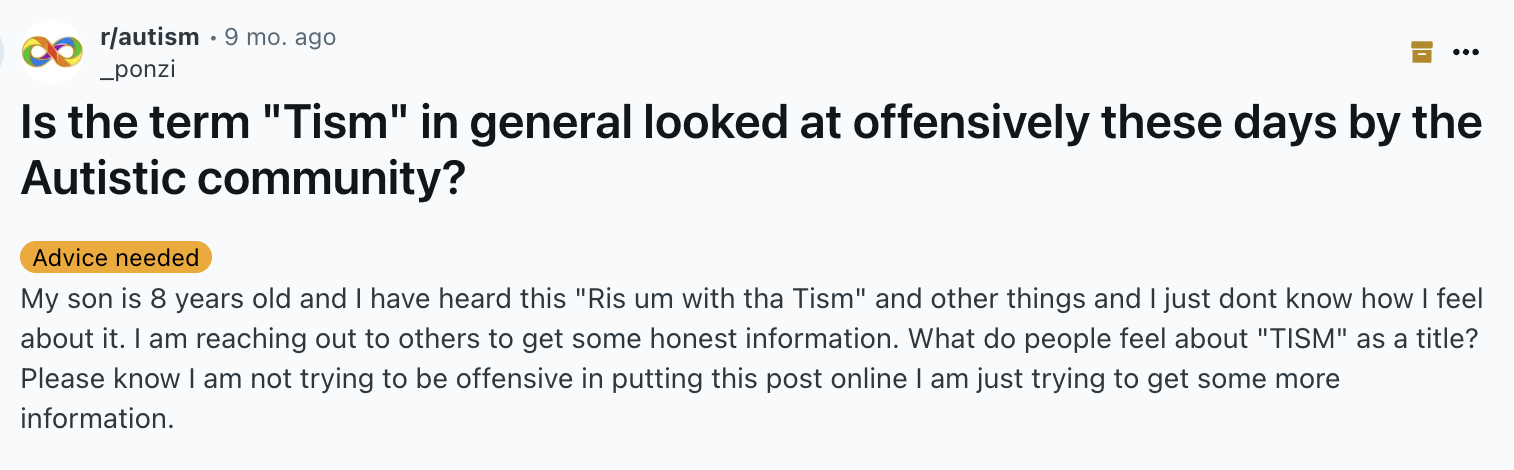
In recent years, the internet has given rise to countless new words and phrases. This includes those related to neurodiversity and disability.
Even the term “neurodiversity” itself, which was first coined in the 1990s, was popularised online by those in the autistic community. And today, we see new terms like “neurospicy”, “AuDHD”, and “neurosparkly” cropping up all the time.
Many of these words are slang terms, but some have even shaped academia. Terms like “masking” and “burnout”, for example, were once only used by neurodivergent people online. But over time, they’ve made their way into research papers, therapy sessions, and even training for educators.
This is a perfect example of how language created by communities can end up influencing the wider world.

No. While some autistic people may favour the term due to its informality, “tism” isn’t a form of inclusive language. This is because it’s not representative of all autistic people.
For example, some members of the autistic community suggest that “tism” is too trivial and childlike, creating the impression that autism is silly or doesn’t present real challenges. From this perspective, it may be seen to fuel inaccurate stereotypes and play down the difficulties that some people with autism face.
Inclusive language should always respect the preferences and dignity of those it refers to, avoiding assumptions and acknowledging the realities that autistic individuals may experience.
If you’re autistic and prefer using the term “tism”, this doesn’t mean you can’t use it or that you have to shy away from words that make you feel more comfortable. It’s just important to be aware of how it can make others feel and recognise that it may not be the best choice if you want to be inclusive.
If you’re a manager discussing autism or neurodivergence in the workplace – whether directly with an employee with autism or with a wider team for training purposes – it’s vital to use respectful, inclusive language. By familiarising yourself with the correct terminology, you can make sure your autistic staff feel included and understood.
Why not review the following terms and incorporate them into your employee handbook or training resources? That way, everyone in your organisation can make sure they’re using inclusive language that promotes dignity and respect for all.
Use “autistic person” or “person with autism”: Both of these terms are generally acceptable, though many autistic people prefer identity-first language (“autistic person”). When in doubt, ask the person their preference or follow their lead.
Say “neurodivergent” rather than “suffers from autism”: Autism isn’t something a person suffers from; it’s a neurological difference. Terms like “neurodivergent” or “neurologically diverse” acknowledge different ways of thinking and processing information.
Choose “has support needs” instead of “low/high functioning”: These labels can be limiting and don’t always capture the complexity of someone’s abilities. Focus on specific support requirements when relevant to the workplace discussion.
Language to avoid: Steer clear of outdated terms, slang terms, or phrases that suggest autism needs to be “cured” or “overcome”. These kinds of words can reinforce harmful stereotypes and imply that being autistic is a problem to fix, rather than a different way of experiencing the world. Aim for language that respects neurodivergent identities and focuses on lived experience.
So, what’s the key takeaway?
Though some autistic people view the term “tism” as a relaxed, less serious alternative to autism, it hasn’t been adopted by everyone. So, if you want to sound inclusive, it’s best to stick to established, respectful terms like “autism”, “autistic person”, and “neurodivergent”. These have broad acceptance and show a commitment to inclusive communication.
What should you do if you’re unsure about someone’s language preferences? If they’ve already opened up to you about their autism, just ask! Most autistic people will appreciate you making the effort to find out what suits them best.
Want to prevent burnout, reduce stress, and make your workplace more autism-friendly? Take a look at our innovative assistive technology options. From helpful live captioning software to lightning-fast dictation software that works in real time, these tools are reshaping the future of work so that difference drives excellence, not exclusion.
“Tism” is an informal, playful shortening of the word autism. It’s mainly used within some parts of the autistic community as a lighthearted way to refer to autistic traits or experiences. It isn’t a clinical term, and not all autistic people use or like it.
No. “Tism” has no medical or diagnostic status. In healthcare and other formal settings, the correct term is autism or autism spectrum condition. Because “tism” is slang, it shouldn’t be used in professional or formal contexts.
The exact origin is unclear, but the term appears to have grown out of online autistic communities. It became popular through memes, TikTok videos, Reddit threads, and other social media spaces where neurodivergent people share experiences. Over time, it has become a kind of in‑group shorthand for some autistic individuals.
“Touch of the tism” is another informal phrase used online, usually in a humorous or self‑referential way. Some autistic people use it to describe moments when their autistic traits feel more noticeable. However, others can find it dismissive or infantilising, so it’s best avoided unless you know the person you’re speaking with is comfortable with it.
It depends on who you ask. Some autistic people enjoy using the term because it feels relaxed and relatable. Others feel it trivialises autism or makes it sound childish. Because opinions vary widely, it’s safest to avoid using “tism” unless an autistic person has told you they prefer it.
If you’re autistic and the term feels right for you, you’re free to use it within your own community or personal expression. But if you’re allistic (not autistic), it’s best to stick to established, respectful language such as “autistic person”, “person with autism”, or “neurodivergent”. When in doubt, ask the individual what terminology they prefer. This is the best way to avoid assumptions and show respect.

Our small but mighty team builds leading-edge software that people love. We pride ourselves on a user-led approach to product design. The voice of the customer shapes what we create and that’s exactly how great assistive tech should be made.
Misophonia is more than just disliking certain sounds. For some individuals, the emotions brought on by it can be so extreme…

Dysgraphia is a lesser-known handwriting difficulty that’s often mixed up with conditions like dyslexia and developmental coordination disorder (DCD). So, how…

Many people with autism report finding it easier to focus on one task at a time, known as “monotropism”. While monotropism…