



What Is Absenteeism and How to Address It at Work
To recover from illness, time off work is crucial. But when staff are repeatedly absent or off for extended periods, it…
Creating a meeting agenda may feel like ‘just another task on your to-do list’, but the reality is, if we put effort into making our meetings more structured, we save time, improve understanding, and get more done. Here’s how to create an agenda that sets you up for success.

You might choose to think of a meeting agenda as the framework for a meeting. It’s there to define who will attend, what needs to be covered, and what the overall aims are. Most of the time, meeting agendas are laid out as lists or tables with subheadings. This makes it easy for all attendees to skim through the agenda and understand what the meeting will be about.
From process mapping to 30-60-90 day plans, there are many ways that businesses plan out their time to boost productivity. But not all of us give this same level of attention to meeting prep. According to research from Flowtrace, almost 65% of routine meetings are held without an agenda. This lack of structure can cause meetings to run over, discussions to go off topic, and staff to come away without a clear picture of what needs to happen next.
With a well-written meeting agenda, everyone knows:
Having these things clearly laid out in a document has a huge impact on productivity because it stops the host from having to clarify points unnecessarily or leave important questions unanswered. This prevents the need for follow-up meetings. It’s suggested that 60% of meetings aren’t planned for or scheduled in. While the occasional unplanned meeting can be helpful for team morale or useful for sharing urgent info, too many can start to eat into focus time and cause stress amongst the team. Some of this stress can be prevented by focusing on concise, carefully planned meetings that are scheduled in the calendar.
When writing a meeting agenda, the easiest place to start is by thinking about your aim. Ask yourself:
If you can be really clear about your meeting purpose and aims, it then becomes much easier to figure out when your meeting should happen, who needs to attend, what each person will be responsible for, and which segments need to be included.
Here’s a simple example agenda for a weekly team meeting. The aim of this agenda is to help the team keep track of projects and tasks:
Weekly Team Meeting Agenda
Meeting Priority: Medium
Date: 05/08/26
Time: 10.30am-12.00pm
Location/Link: Room A (Next to coffee lounge)
Participants: Sharon, Lucy, Ed, Fatima, Al, Maria
(Complete during/after meeting)
(Complete during/after meeting)
(Complete during/after meeting)
(Complete during/after meeting)
Not every agenda will include sections to fill in during or after. There are many types, and you may find that you prefer different formats for different kinds of meetings.
If you want to, you can follow the meeting agenda template above, replacing the text with your own notes. Or, you can find one online that better suits your meeting type. The great thing about using a meeting agenda template is that it becomes a set process you can share with your team. This benefits everyone by:
Looking to bring structure and clarity to your meetings? These free meeting agenda template pages are well worth bookmarking:
When following an agenda template for the first time, some people panic when segments run over, but this is normal and to be expected. Over time, teams tend to become familiar with the parts of the meeting that take longer. This gives everyone an opportunity to work on streamlining things.
If you’re the person leading regular meetings, why not challenge yourself to ask questions a bit faster, switch open questions to closed questions, or request any unaddressed queries by email before the meeting starts? This speeds things up and saves time.
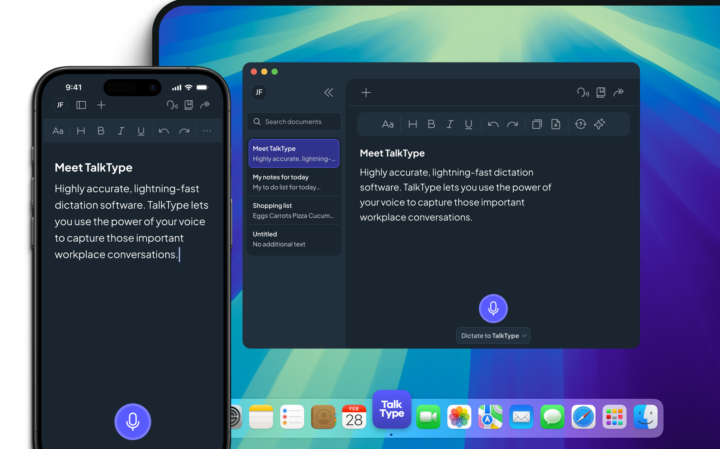
If you or the person hosting the meeting find it difficult to type out your meeting agenda, consider speaking the key agenda points out loud, using a real-time dictation app. This can help you to get your thoughts down before formatting them into a more formal document or email.
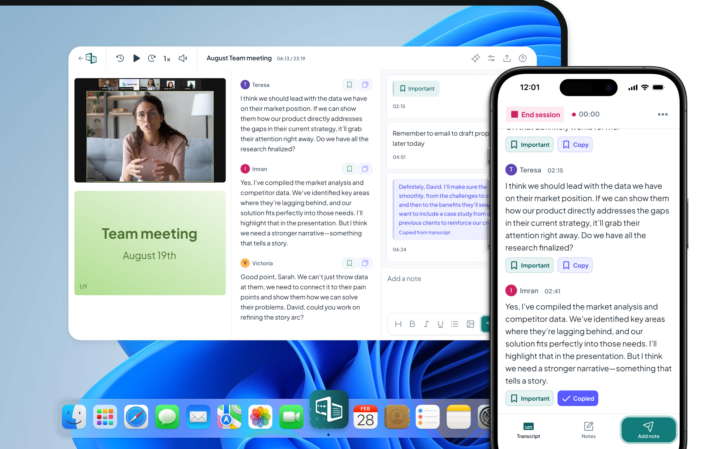
Finally, try to record meeting minutes or make notes during the meeting so that you have written evidence of what needs to happen next. If you find typing and listening difficult, use a live captioning software. This will allow you to give your full attention to the meeting and what’s being said. You can then go back in and tidy up your notes afterwards.
Having an agenda for each meeting ensures you enter every meeting prepared, with a clear focus. This structure makes sure everyone involved knows what’s happening and why.
There’s no set structure for a meeting agenda, but it’s recommended to include your meeting title, date, time, location, participant names, meeting aims, and discussion topics as a bare minimum. If you’re including your meeting agenda as part of your Teams call details, some of this information will be auto-populated for you.
Meeting agendas are typically written by the person hosting the meeting. In a workplace, this might be a team leader or manager. If it’s your first time leading a meeting or creating an agenda, you might want to ask a colleague to review it to ensure you haven’t missed any important details.
Team meeting agendas tend to focus on group updates, collective decision-making, and shared priorities, while 1:1 agendas are more personal and development-focused. In a 1:1, you might cover individual performance, career goals, personal challenges, and feedback. Team meetings need more structure to manage multiple voices and perspectives, whereas 1:1s can be more conversational and flexible with timing.

Our small but mighty team builds leading-edge software that people love. We pride ourselves on a user-led approach to product design. The voice of the customer shapes what we create and that’s exactly how great assistive tech should be made.
To recover from illness, time off work is crucial. But when staff are repeatedly absent or off for extended periods, it…

According to research, presenteeism leads to longer recovery times, lower productivity, and even “contagious presenteeism” where illness spreads to other employees.…

Ready to knuckle down and revise? We’ve compiled some of the best places to study according to students. In this guide,…