



Misophonia: Sound Triggers, Symptoms, and Support
Misophonia is more than just disliking certain sounds. For some individuals, the emotions brought on by it can be so extreme…
What should you know about dyslexia to support people who have it? And are dyslexic people disabled? This post aims to review some of these questions and define some classifications.

With a better understanding of dyslexia and its terminology, you should feel more confident to support anyone you know who has it.
Dyslexia is a lifelong condition with far-reaching impacts. As a learning difference, it affects how people understand and process language, including verbal, reading, and writing. For some people, it can also impact short-term memory, concentration levels, and organisation abilities.
But is being dyslexic a disability? Well, while there are some people who don’t like to think of themselves as disabled, many people with dyslexia do have difficulties at school, work, or in other situations. And this can leave them exposed to discrimination and stigma.
It can be. Many dyslexic people meet the legal definition of disability under the Equality Act 2010, depending on how much their dyslexia affects their day-to-day life. We explain how that works below.
Dyslexia is a learning difference experienced by around 10% of the UK population, according to the British Dyslexia Association (BDA). It affects people across the full spectrum of intellectual capabilities and is a lifelong condition.
Because of its complex and hidden nature, parents and teachers can overlook the condition in children. Reports suggest 80% of dyslexics are leaving schools undiagnosed. So, gaining a better awareness of the effects of dyslexia, such as visual language processing, is important to ensure everyone receives the support they need as early as possible.
People with dyslexia often struggle with phonological awareness. And they may have difficulties with sounding out, blending, and rhyming words. Yet, despite these challenges, there are positives too. Some people with dyslexia report strengths in areas such as creativity, problem-solving, and design.
So if you are dyslexic, are you disabled? It’s a complicated answer. Because, while dyslexia is a neurodivergent condition and a lifelong difference in thinking, it can also be classed as a disability under the Equality Act 2010, depending on how it affects the individual. Under section 6 of the Act, a person is disabled if they have a physical or mental impairment that has a substantial and long-term adverse effect on their ability to carry out normal day-to-day activities. Disability is a listed protected characteristic under the Act, helping to protect people who meet its definition from harassment, victimisation, and other forms of discrimination.
While dyslexia can be legally recognised as a disability, many people with dyslexia don’t think of themselves as disabled. Many prefer to say they’re neurodivergent or have a different way of thinking.
Dyslexia can be considered a disability under British law, which includes Scotland, depending on how it affects the individual. However, the Scottish Union Learning classifies dyslexia as a learning difference. And that’s partly because many people with dyslexia don’t like to consider themselves disabled.
Whichever phrase they use, people whose dyslexia meets the definition of disability under the Equality Act 2010 are protected by the Act in England, Wales, and Scotland from discrimination.
Rudolf Berlin, a German ophthalmologist, coined the term ‘dyslexia’ in 1883. He had noticed many of his patients would struggle with reading words and formalised the medical term of dyslexia as a clinical diagnosis.
When dyslexia meets the definition of disability under the Equality Act 2010, employers are duty-bound to make reasonable adjustments for candidates and employees. The types of reasonable adjustments may include giving extra time for tasks and providing assistive technology like captioning and note-taking software.
Since disability is a protected characteristic under the Equality Act 2010, applicants and successful hires are legally protected from discrimination. Applicants do not necessarily have to formally disclose their condition to be protected, although telling an employer about their dyslexia can help them understand what reasonable adjustments may be needed. However, it is common for neurodivergent people to not disclose their condition for fear of stigma.
So what type of disability is dyslexia? The UK considers dyslexia to be a learning difficulty. This is different from the US where they accept dyslexia as a learning disability.
Sir Jim Rose defined dyslexia as a learning difficulty in his ‘Rose Review’, published in the UK in 2009:

“Dyslexia is a learning difficulty that primarily affects the skills involved in accurate and fluent word reading and spelling. Characteristic features of dyslexia are difficulties in phonological awareness, verbal memory and verbal processing speed.”
Contrary to the term ‘learning difficulty’, US-based charity IDA (International Dyslexia Association) classifies dyslexia as a language-based learning disability. And they explain why on their website:
“Dyslexia affects individuals throughout their lives; however, its impact can change at different stages in a person’s life. It is referred to as a learning disability because dyslexia can make it very difficult for a student to succeed academically in the typical instructional environment.”
In 2025, a panel of dyslexia experts agreed on an updated definition through the Delphi study, which the British Dyslexia Association has now adopted: “Dyslexia is a set of processing difficulties that affect the acquisition of reading and spelling… The most commonly observed cognitive impairment in dyslexia is a difficulty in phonological processing (i.e. in phonological awareness, phonological processing speed or phonological memory). However, phonological difficulties do not fully explain the variability that is observed. Working memory, processing speed and orthographic skills can contribute to the impact of dyslexia.”
Dyslexia isn’t usually considered a cognitive disability in the sense of a general intellectual impairment, though it does involve specific processing difficulties, such as with phonological processing, working memory and processing speed. Neurological research from Germany indicates that dyslexia “is not equivalent to a general cognitive impairment”.
Further evidence in a 2023 literature review entitled “The Use of Cognitive Tests in the Assessment of Dyslexia” suggests the process of diagnosing dyslexia involves the discovery of unexpected or unanticipated difficulties that contradict the individual’s abilities and experiences. But for intellectual disabilities, clinicians would expect to find cognitive difficulties in the individual.
It’s important to note that dyslexia occurs across the full range of intellectual abilities and should not be equated with intellectual disability. The condition is a learning difficulty and should not hold anyone back from achieving their full potential – when they receive the correct interventions.
Dyslexia is a specific learning difference that can also be considered a hidden disability. This is because its signs aren’t always visible, and many people with the condition do not disclose it to their employers, colleagues, and sometimes friends and family. Since the condition also exists on a spectrum, the impact of having dyslexia can show up in different ways. Researchers sometimes describe different types of dyslexia, although these are reading profiles rather than formal diagnoses. They can include:
Dyslexia affects around 1 in 10 people. So while it’s a common condition, it still isn’t well understood. People with dyslexia continue to face stigmas and judgements that not only lead to low self-esteem but increase the chances they’ll conceal the condition.
Dyslexia is a neurological difference that affects learning outcomes. It often runs in families. People will have the condition for life and there is no cure, although the right teaching and support can make a real difference.
So while dyslexia can be considered a disability under the Equality Act 2010, depending on how it affects the individual, it is not a physical disability in the traditional sense. Instead, dyslexia is a specific learning difference. Rather than classifying someone as “physically disabled”, we should consider that someone with dyslexia has differences in how their brain processes information, which affect the way they learn.
And this is another reason why many people prefer to categorise themselves as neurodivergent.
PIP stands for Personal Independence Payment. It’s a form of extra money to support people who have a long-term physical or mental illness or disability. If you’re wondering whether you can get PIP for dyslexia, the short answer is that you may be eligible. Having dyslexia does not automatically qualify someone for PIP, as eligibility depends on how the condition affects their daily life.
According to sources, in 2022 there were 34,745 people in Scotland, England and Wales with dyslexia, dyspraxia, specific learning disorders and a speech or language disorder who received weekly support of up to £156.90 through PIP.
Being eligible for PIP depends on how much your condition affects your daily life. PIP isn’t awarded based solely on having a condition — instead, the application process looks at how your disability impacts everyday activities such as reading, understanding written information, communicating with others, managing money, or remembering tasks. If dyslexia significantly affects these areas, you may be entitled to support. Each claim is assessed on a case-by-case basis, and it can be helpful to seek advice from a benefits advisor or organisations like Citizens Advice to understand what evidence might be needed.
Now that Disability Living Allowance (DLA) has largely been replaced by Personal Independence Payment (PIP), new claims can only be made for children under the age of 16. In order to be eligible for DLA, applicants (often parents or guardians) need to evidence the ways in which the child needs extra care/supervision or has mobility problems beyond what’s normal for the child’s age.
While the care component of DLA may be awarded for children who need regular help or constant supervision due to safety, difficulty understanding instructions, poor communication, or personal care, the mobility component (which focuses on the ability to get around) less often applies for dyslexia.
Assistive technology can be used to support and enhance communication for people at workplaces and universities. CareScribe is at the forefront of assistive technology and our products address a wide range of needs.
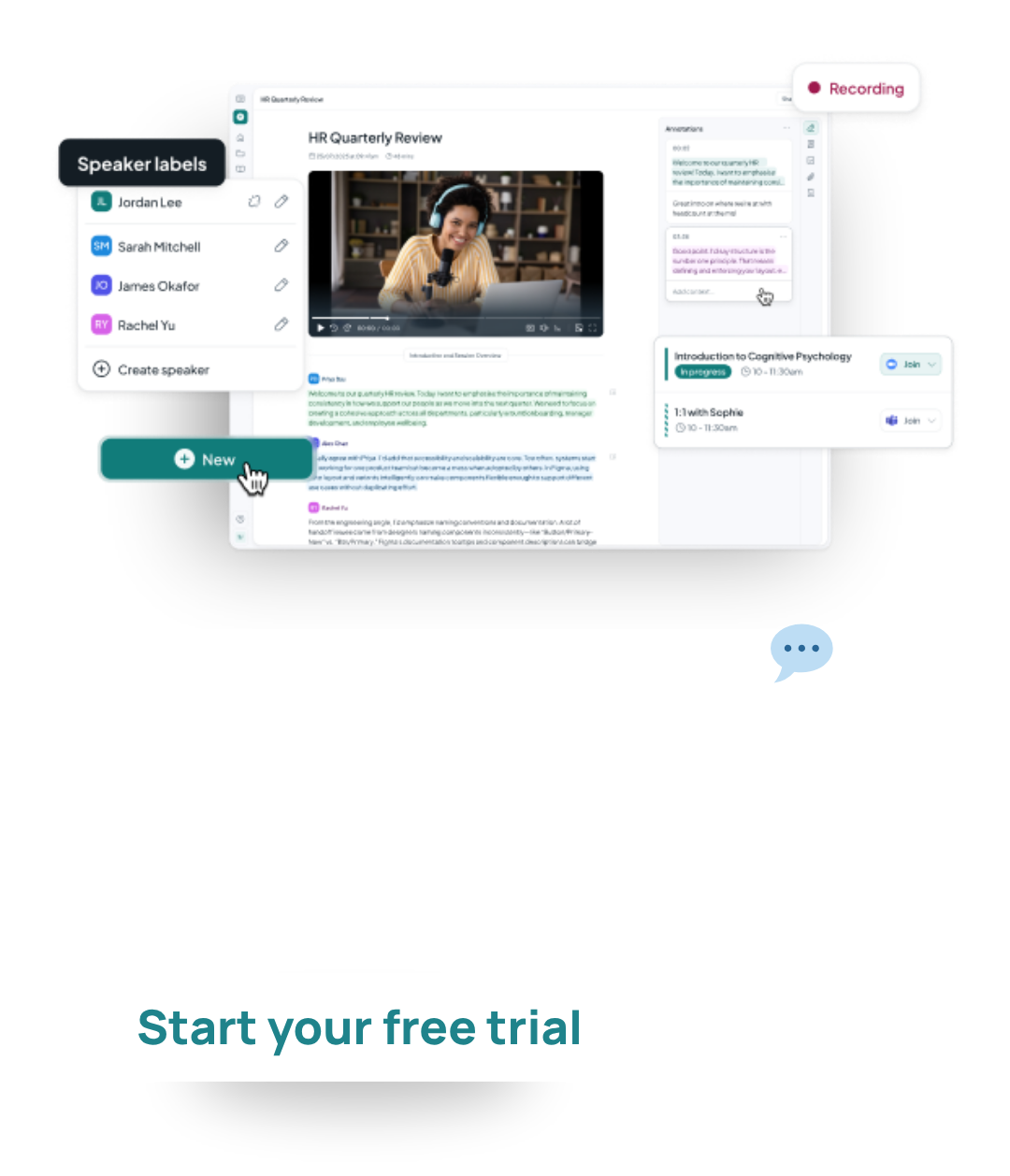
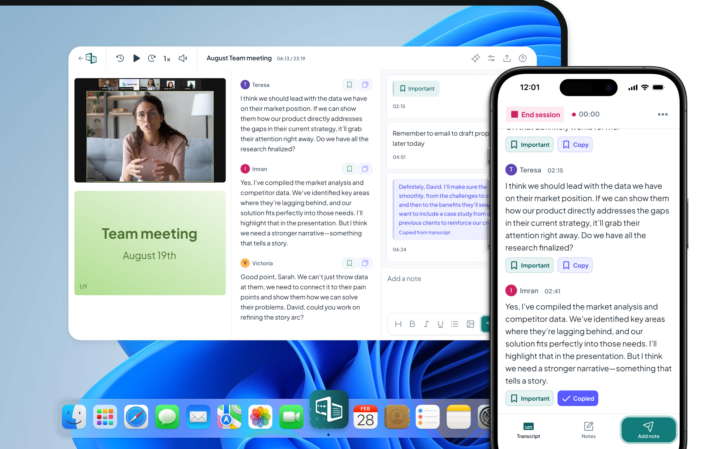
Featuring a set of custom dictionaries with live captioning and note-taking functions, Caption.Ed can add captions instantly to your meetings, lectures or seminars, either in-person or online. You can also add timestamped notes, synced to your transcript, and highlight key information so you never miss out on the important stuff.
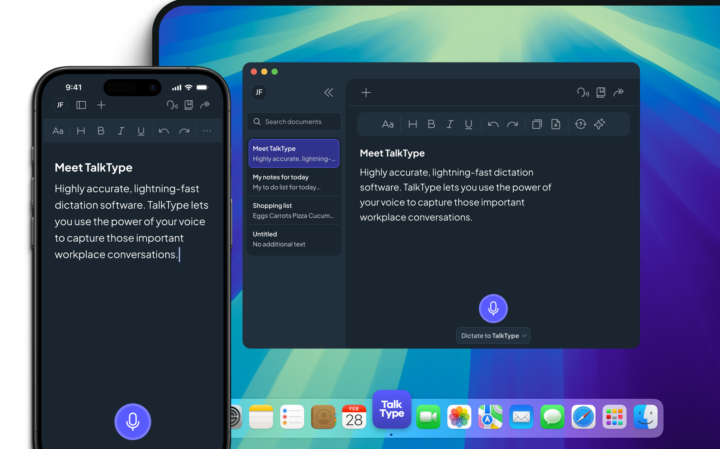
TalkType is highly accurate dictation software built for Windows, Mac, and mobile devices. Dictation software like TalkType can transform the way you work and study. As well as boosting productivity and efficiency, dictation software can provide autonomy to anyone who cannot type using traditional keyboards.
Caption.Ed and TalkType are dynamic AT tools that are transforming outcomes across many workplaces and universities.

Our small but mighty team builds leading-edge software that people love. We pride ourselves on a user-led approach to product design. The voice of the customer shapes what we create and that’s exactly how great assistive tech should be made.
Misophonia is more than just disliking certain sounds. For some individuals, the emotions brought on by it can be so extreme…

Dysgraphia is a lesser-known handwriting difficulty that’s often mixed up with conditions like dyslexia and developmental coordination disorder (DCD). So, how…

Many people with autism report finding it easier to focus on one task at a time, known as “monotropism”. While monotropism…