



Misophonia: Sound Triggers, Symptoms, and Support
Misophonia is more than just disliking certain sounds. For some individuals, the emotions brought on by it can be so extreme…
To help you get to grips with what reasonable adjustments are and why you need to make them, we’ll break down reasonable adjustments and share some examples in this guide. Reviewing this guide should help you understand more about reasonable adjustments and how these can benefit both employers and employees.

If you’re an employer in England, Wales, or Scotland, you must make reasonable adjustments to the working conditions of any staff with disabilities or neurodivergence. Over 4 million workers have a confirmed disability and it lands on employers to ensure they receive equity to carry out their roles.
A reasonable adjustment is an alteration or change that an organisation, service, public function, or venue must make to accommodate people with disabilities, neurodivergence, or physical and mental health conditions.
Employers must adhere to the Equality Act 2010 which ensures people with disabilities or neurodivergence gain access to the same opportunities as those without.
Some of these entities will have some form of occupational health or reasonable adjustment policies to guide them. But to protect people with disabilities from discrimination, victimisation, or harassment, they must also follow The Equality Act 2010.
It’s worth noting that what one organisation deems a reasonable adjustment may be different to another. And while there is no gold standard, adjustments should be substantial and made within the context of the organisation’s resources.
Entities can make different types of reasonable adjustments for people with disabilities. And determining what is a reasonable adjustment depends on the individual circumstances of each person and their disability. Some factors include:

“The general definition of disability for the purposes of the Act is a physical or mental impairment which has a substantial and long-term adverse effect on a person’s ability to carry out normal day-today activities”
Equality Act 2010 Guidance
UK Government Equalities Office
Individuals that receive a reasonable adjustment may include full and part-time staff members, apprentices, contractors, business partners, clients, customers, and other types of users within the following areas:
Once you’ve recognised the need to make reasonable adjustments, how should you go about making them? Two potential pathways can help you.
If an employee comes to you with a confirmed disability, like neurodivergence, one option is to pay for a workplace needs assessment. This is a private, independent review conducted by an impartial assessor. Sometimes, assessors will have a specialism. So if your staff member has dyslexia, for instance, they may benefit from a dyslexia-focused workplace needs assessment.
Another route for making reasonable adjustments is the government-funded Access to Work (Atw) scheme. This offers funding of up to or around £60,000 and can support employees with referrals to specific services. Atw supports a range of interventions from funded transport to translators. And a diagnosed condition is not a prerequisite.
There is no official timeline for employers to make a reasonable adjustment for people with disabilities.
Should an employer fail to comply with their duty to make reasonable adjustments they may leave themselves open to claims from employees. In these cases, the time limit for claims is three months from the date of the act.
To promote a high degree of occupational health, employers will consider a reduction in hours as a reasonable adjustment. Staff with any physical conditions or disabilities may have specific accessibility requirements and need extra time to arrive or leave their workplace. People who need wheelchair access or who use the underground but can’t access a crowded tube carriage, for instance, may be able to request earlier or later start dates.
Full-time employees can seek a flexible working hours contract by talking to their employers and explaining how the condition affects their ability to work.
Failing to make reasonable adjustments for an employee with a disability may be discrimination. This can lead to a possible discrimination event, which employers should avoid.
Also, there are some cases where employees will claim for reasonable adjustments that employers believe aren’t reasonable. Such cases warrant a discussion with the employee to review their decision and agree on the best alternative support methods.
Employers can’t justify any grounds for not making a reasonable adjustment when needed. But the classification of reasonable depends on the facts and details of each situation. A variety of factors will influence the outcomes which may include available costs, resources, and appropriate permissions from relevant authorities.
There will be situations where the most appropriate reasonable adjustment to make comes at a cost that’s disproportionate or unaffordable. For instance, a new employee who uses a wheelchair may ask their new employer to install a lift to access an upper floor. That employer may make enquiries and discover the cost is unaffordable and may be a risk to the business.
The employer can turn down the request for a new lift installation on the grounds of cost or risk to the business. But in doing so they must offer to make reasonable alternative adjustments to accommodate the individual that do fit within their means.
An employment tribunal can consider any financial compensation for monies lost due to discrimination. Financial compensation can include various aspects such as salary, sick pay, pension, and any work-related benefits.
Compensation values can vary depending on the severity of the discrimination. For instance, a one-off case may cost up to £10,000 with more serious cases commanding anywhere up to £50,000.
For employees seeking a discrimination claim, they will need to ensure they make any claim within 3 months of any event they perceive as discriminatory.
If you have a disability, neurodivergence, physical or mental health condition then you’ll want to ask your employer to make reasonable adjustments.
In this case, it’s a good idea to create a plan of action.
For instance, when asking employers to make reasonable adjustments for ADHD, individuals may want to think about and draw up a list of the types of assistance they need before a formal discussion.
But there are some other things you can do too.
Let’s take an example of people who need to ask for reasonable adjustments for dyslexia. The best place they can start is by contacting Human Resources to ask to review their reasonable adjustments policy or occupational health documents.
These policies may include a set of recommended resources that can help, such as a process for applying to the government’s Access to Work scheme.
As part of any planning process, keeping a live and up-to-date record of all workplace adjustments agreed between you and your manager is important. Doing so ensures you can move these agreed adjustments with you into new roles, providing new managers with evidence of what you need to perform.
Referred to as a reasonable adjustment passport, any new starter or existing employee with a disability should complete their passport with their line manager.
Your planning should include preparing a letter to the HR lead to make a formal request for reasonable adjustments. Your letter should include references to the following:
Your planning process should include a regular review of reasonable adjustments with your manager. This is to ensure you have exactly what you need to do your job and that the most responsible people are in place.
So, now you know a little more about what reasonable adjustments are, why you should make them, and how you can do so.
Let’s run through some situations where they might apply.
Sometimes employees join organisations and have a pre-existing diagnosis. Or they receive them while employed. For instance, a case study from AbilityNet shows how Rachita joined a company with a dyslexia diagnosis but went on to receive an ASD diagnosis while working for them.
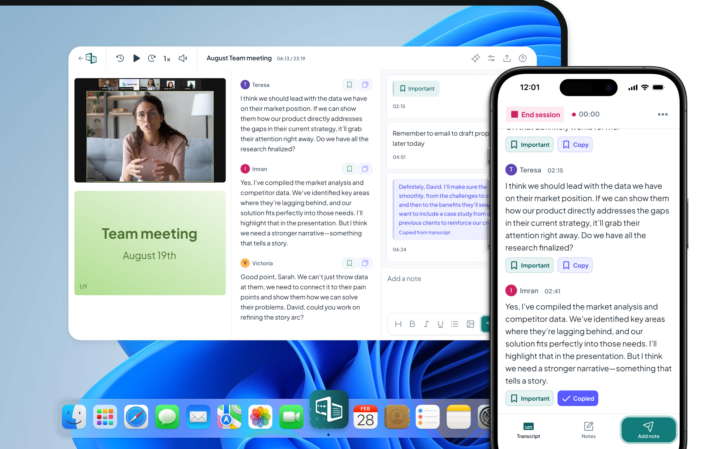
To help her dyslexia at university Rachita received funding for some assistive technology. But of course this hadn’t transferred to her work. Instead, captioning technology like Caption.ed can meet the majority of adjustments she needs, especially recording meetings while working from home and in the office.
Staff members with ADHD may need support with working memory, like processing and remembering information when it’s given orally. And this is an area where Caption.Ed can also help them, since users can capture accurate transcripts to refer to after meetings – even informal ones using captioning through our app.
By freeing up space in a user’s working memory, Caption.Ed can bridge the gap for employees with ADHD. And with both channels of visual and audio content available, staff members’ working memory becomes less burdened and better able to retain what they see and hear.
Some neurodivergent staff may need you to make adjustments to their working patterns or even the locations they work from. Busy, crowded office spaces can lead neurodivergent people to experience problems with distraction, overstimulation, and sensory overwhelm.
One way to make reasonable adjustments can be to offer them space apart from colleagues or have the option of quieter spaces to work from. Letting them step out from hot-desking obligations, for example, can make a huge difference in productivity. Or, in many cases, offering them more opportunities to work from home.
One type of reasonable adjustment can be appointing a workplace buddy or mentoring scheme to reduce feelings of overwhelm.
Staff members with ASD, in particular, can struggle with problems such as face blindness, matching cultural norms around communication, and feelings of apartness or isolation. And an appropriate buddy or mentor could help with aspects such as a:
Second pair of eyes to check or validate information or reports.
Referral points to help with navigating cultural norms and workplace habits.
Supportive during points of overwhelm or overstimulation.
Personalising a workstation can also be a reasonable adjustment for staff who need specific help with physical needs or the opportunity to reduce the number of distractions in the working area.
Personalisation could include standing desks, earphones, ergonomic chairs, and particular types of low-level lighting.
A job interview should not put any applicants at a disadvantage because of their disability or neurodivergence. As a result, applicants can request that potential employers make reasonable adjustments in the recruitment process.
According to the charity Scope, examples of adjustments to the recruitment process may include:
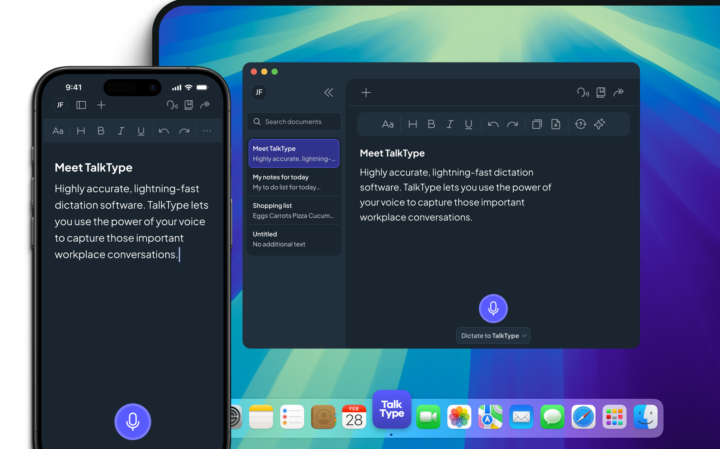
Employees with dyslexia or dyscalculia may need support with written communication. And dictation software is a perfect form of assistive technology that can help them overcome these difficulties and communicate with fluency.
Our dictation software–TalkType–is designed for people who may struggle to type using keyboards. And, as well as supporting better accessibility, TalkType can give staff a stronger sense of independence and autonomy.
Caption.Ed and TalkType are CareScribe’s flagship forms of assistive tech. And they can elevate staff performance levels when used as part of a workplace needs assessment or the Access to Work scheme.
By allowing staff greater autonomy and control over productivity and communication, they’re both recognised and effective AT tools that will make a difference for your teams.
Chat with us now about making reasonable adjustments through Access to Work or a Workplace Needs Assessment.

Our small but mighty team builds leading-edge software that people love. We pride ourselves on a user-led approach to product design. The voice of the customer shapes what we create and that’s exactly how great assistive tech should be made.
Misophonia is more than just disliking certain sounds. For some individuals, the emotions brought on by it can be so extreme…

Dysgraphia is a lesser-known handwriting difficulty that’s often mixed up with conditions like dyslexia and developmental coordination disorder (DCD). So, how…

There’s a lot of confusion when it comes to understanding ADHD in men. In this helpful guide, we explore different types…