


Misophonia: Sound Triggers, Symptoms, and Support
Misophonia is more than just disliking certain sounds. For some individuals, the emotions brought on by it can be so extreme…
The terms equality and equity might sound similar and are often confused and used interchangeably. However, equality and equity are not the same, and the methods used to achieve them are very different. Making a clear distinction between these two terms is important for businesses to understand to ensure that everyone has access to the same opportunities regardless of their circumstances.

The implementation of equality and equity can lead to dramatically different outcomes, especially for marginalised groups of people.
Equality ensures that each individual or group of people are given the same resources or opportunities. Whereas equity recognises that each person has different circumstances and allocates the exact resources and opportunities needed to reach an equal outcome.
Equality means treating everyone the same, providing the same resources and opportunities to all individuals, regardless of their unique circumstances.
Equity involves recognising that each person has different needs and circumstances. It focuses on providing individuals with the specific resources and opportunities they need to achieve equal outcomes.
It advocates for those who may have been disadvantaged, making it more difficult for them to be successful and have access to the same opportunities as others. It takes into account all the factors that people may face when determining what is fair.
Although treating everyone equally might seem fair in principle, it doesn’t always address individual needs or circumstances. For example, offering the same professional development opportunities to all employees ignores the fact that some people may require additional support due to varying backgrounds or experiences.
Equity, on the other hand, ensures that each employee receives the necessary resources to succeed, acknowledging and addressing these differences.
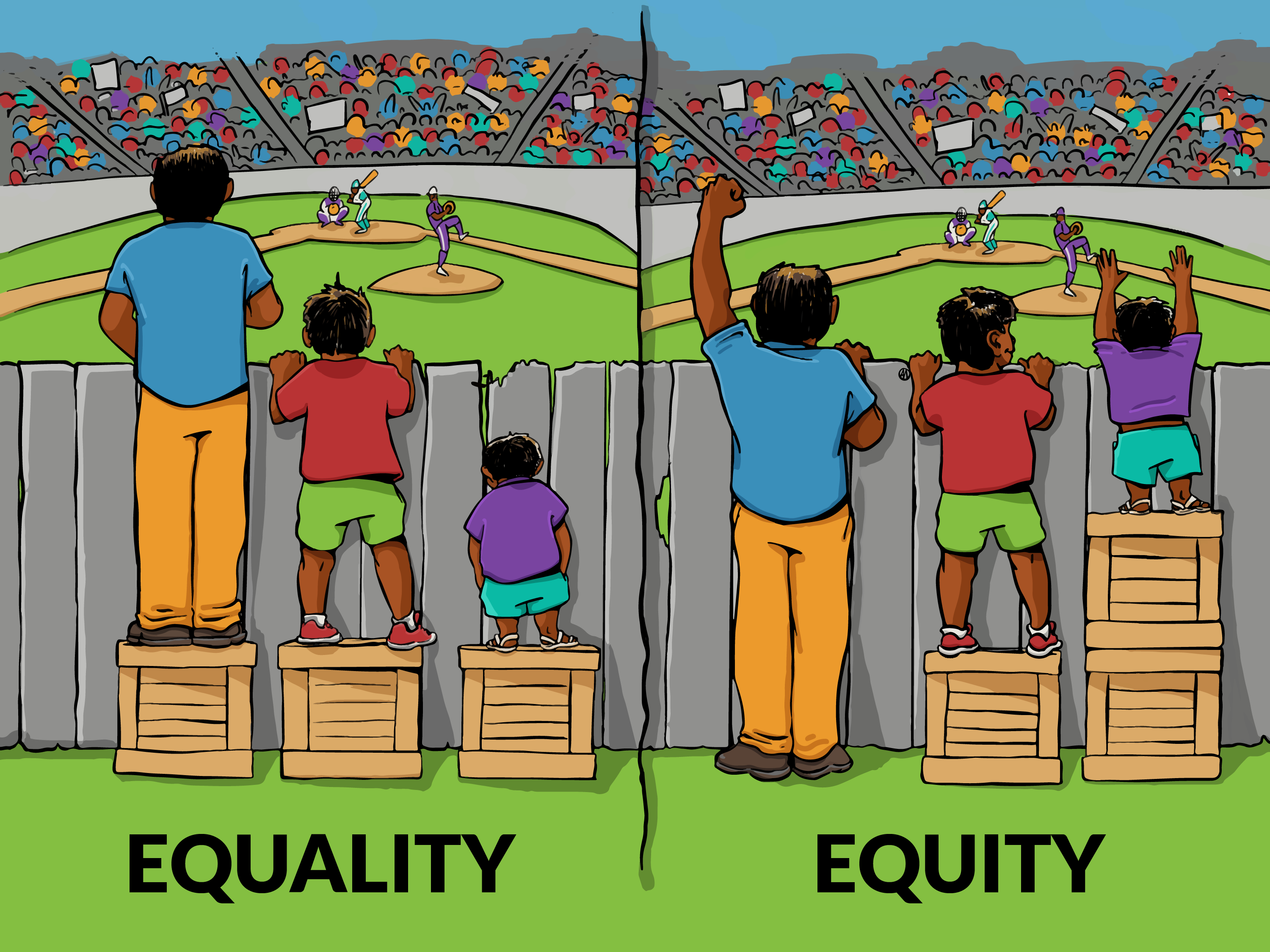
These policies provide the same benefits and opportunities to all employees, such as uniform healthcare plans or standardised training programs.
Policies tailored to meet the diverse needs of employees. For instance, offering flexible working arrangements for parents or providing assistive technologies for employees with disabilities to ensure that everyone can perform at their best.
Implementing equity in the workplace can have many benefits. It can lead to an increased diversity of your workforce through attracting a wider range of talent by accommodating their various needs and backgrounds. Equity can also lead to enhanced employee satisfaction, as they will feel more valued and supported when their individual circumstances are considered.
Equitable workplaces often see higher productivity as employees are better equipped to perform their roles effectively.
To transition from equality to equity, organisations can first acknowledge and assess individual needs of employees through surveys or one-to-one meetings.
Organisations can then develop inclusive polices that are flexible and consider the diverse circumstances of their workforce. They can additionally provide targeted resources such as training, tools or support systems to employees based on their specific requirements.
Leaders play a crucial role in fostering equity. They can demonstrate a commitment to equity by setting the tone through their actions and decisions. Leaders can also ensure that resources are distributed based on individual needs to promote fair opportunities across the workplace.
Additionally, leaders can encourage an open dialogue with their employees by creating an environment where employees feel comfortable discussing their needs and the challenges they face.
By understanding and implementing equity, organisations can create a more inclusive and supportive workplace, leading to enhanced employee satisfaction and overall success.

Our small but mighty team builds leading-edge software that people love. We pride ourselves on a user-led approach to product design. The voice of the customer shapes what we create and that’s exactly how great assistive tech should be made.
Misophonia is more than just disliking certain sounds. For some individuals, the emotions brought on by it can be so extreme…

Dysgraphia is a lesser-known handwriting difficulty that’s often mixed up with conditions like dyslexia and developmental coordination disorder (DCD). So, how…

Employees and students are protected from direct discrimination under the Equality Act 2010. In this helpful guide, we’ll walk you through…