



What Is Victimisation at Work and What Are Your Rights?
Whether you’re an employer or employee, learning about victimisation in the workplace helps you to recognise and respond to victimising behaviour…
Ever feel as though your brain is overloaded with thoughts? You might benefit from trying the “brain dump” method. In this post, we explore what “brain dumping” is and how it can help you feel calmer and more in control.

Brain dumping is an informal wellbeing technique that involves taking all the thoughts and feelings that are in your head and getting them down onto paper. A brain dump can take the form of a written list, a series of random words, or even as a diagram or drawing – there are no strict rules.
Since brain dumps are designed to decrease overthinking, they should be carried out as freely as possible, without judgement or the need to perfect what ends up on the page.
Thinking is a natural human behaviour, but it can become detrimental when it happens too much or transforms into negative thought spirals. This is what’s known as rumination. Rumination can cause trouble solving problems, inaction, biased beliefs, and even difficulty in relationships. Yet, most of the time, the thoughts that occur during rumination aren’t based on fact; one study looking at worrying in generalised anxiety disorder found that over 91% of worries never materialise. This is where brain dumping can help.
With a brain dump, you release all of the thoughts that are cluttering up your brain in order to feel calmer and more in control. While focused research into brain dumps is limited, we do know that activities like positive affect journaling (PAJ) reduce distress and that writing about difficult or traumatic events can improve physical and mental wellbeing.
Many of us can benefit from getting our thoughts down onto paper, but it may be particularly helpful if:
It’s worth giving brain dumping a go, even if you’re just curious. It’s not uncommon for educators to use brain dumps as recall tools during lessons, so you may find it helpful for absorbing new info if you’re studying or spending time on continued professional development.
There’s no set way to do a brain dump. So if you find too many rules a blocker to getting started, try to relax and pick a technique that feels most accessible to you. Here are some ideas you might want to try:
It’s been shown that making to-do lists or writing down worries before bed can help people to drift off. If you struggle with racing thoughts that keep you awake at night, have a go at jotting down any concerns or things you need to do the next day (this includes any work responsibilities) just before you go to sleep. While it’s generally not recommended to think about work at bedtime, writing tasks down is much better than letting them plague your brain throughout the night.
Ever find yourself returning to the office after a holiday feeling foggy and overwhelmed? Maybe you rushed your handover and aren’t sure how to pick up where you left off? Instead of forcing your brain to immediately come up with a to-do list, first free-write all the information you can remember from before the holiday that pops into your head. Once you’ve circled any tasks or ideas that are important, you can turn them into a “proper” list. While it might seem like an extra step, taking the pressure off can help you to remember more than if you’d jumped straight in at the deep end.
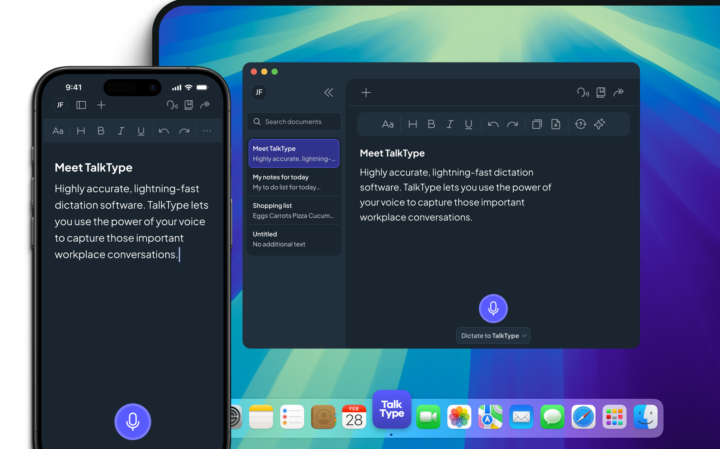
You don’t have to limit brain dumps to times when you’re sitting still or have a pen and paper to hand. Why not use your phone’s in-built recorder or a real-time dictation tool to document thoughts on the go? Dictating makes it easier to remove all the mental noise so that you can properly take in your surroundings and focus on being more present.
Absolutely. For people who experience rapid or intrusive thoughts, getting everything out onto paper can make it easier to focus, create, plan, and regulate emotions. It can also reduce the pressure to “hold everything in working memory”, which is something many neurodivergent individuals find particularly tough.
It’s completely up to you how you follow up a brain dump. If you’re feeling inspired, you might want to get stuck straight into a task, or you may want to spend some time meditating or organising your thoughts into actionable steps. It’s best to assess how you feel after writing and go from there.

Our small but mighty team builds leading-edge software that people love. We pride ourselves on a user-led approach to product design. The voice of the customer shapes what we create and that’s exactly how great assistive tech should be made.
Whether you’re an employer or employee, learning about victimisation in the workplace helps you to recognise and respond to victimising behaviour…

Ever find yourself replaying thoughts over and over again in your mind? Perhaps you wish you could just scream “STOP” and…

National Wellness Month is a great opportunity for organisations to prioritise staff wellbeing. But celebrating it doesn’t mean the same “wellness”…