

Misophonia: Sound Triggers, Symptoms, and Support
Misophonia is more than just disliking certain sounds. For some individuals, the emotions brought on by it can be so extreme…
At CareScribe, we like to think we know a thing or two about Assistive Technology (AT). And while our products are perfect examples of a high-quality assistive technology tools, we wanted to share a broader view of assistive tech in higher education.

So what is Assistive Tech? In this article, we’ll cover the basics. Plus we’ll give you insights into the range of available Assistive Technologies with some examples of its effectiveness in Higher Education settings.
Assistive Technology describes any tools, products, or systems that help individuals with disabilities or impairments to carry out tasks and activities. Assistive Tech products support people who face difficulties with typing, writing, speaking, hearing, seeing, walking, moving, or understanding.
Specifically, AT supports students in Higher Education to manage specific learning differences such as dyslexia. But they can also support students with a range of complex needs including visual, speaking, or hearing impairments.
According to WHO, over 2 billion people will need at least one AT product to support them by 2030. Plus, since the 2014/15 academic year, there’s been a steady increase in the number of students who report a disability rising to almost 50% by 2019/20. So the need is growing.
Young people can often experience overlaps between different types of learning obstacles. For example, research from RNIB reveals over 50% of young people with visual impairments also have additional special education needs or disabilities. So, to address these needs, various Assistive Technology tools are available to support students to complete their tasks, activities, or assignments, and act as an alternative way to overcome these difficulties.
To give you some examples, here’s our list of some of the critical tools used in university settings.
Higher Education providers use Assistive Technology to support students with learning. But there are some specific ways they have an impact.
Improving rates of accessibility is critical to unlocking students’ potential. And there’s no better example of this than Caption.Ed’s founder Dr Rich Purcell.
To succeed in his studies with a dyslexia diagnosis, Rich recognised he needed extra help to understand the broad range of medical terminology. And so Rich embarked on creating his own Assistive Technology that included a medical dictionary which he then leveraged to complete his studies.
Introducing Assistive Tech to learning is a clear driver for increasing academic achievement. By enabling students to overcome their difficulties, AT unlocks students’ potential and gives them the confidence to achieve their academic goals.
AT supports a better sense of inclusion for students which, in turn, improves their well-being and mental health.
Various studies show that many aspects of student life improve with the use of Assistive Technology. One report showed accessibility and inclusion increased by 20%, with improvements in autonomy and to teaching and learning processes.
Of course, not only is it beneficial to students and faculty to provide appropriate AT, but ensuring website content is accessible is also a legal requirement. All web delivery platforms must adhere to the WCAG 2.1 AA standard to meet 2018 Digital Accessibility legislation. And Heads of Accessibility should be accountable for this.
Assistive technology can be used to support and enhance communication for people at workplaces and universities. CareScribe is at the forefront of assistive technology and our products address a wide range of needs.
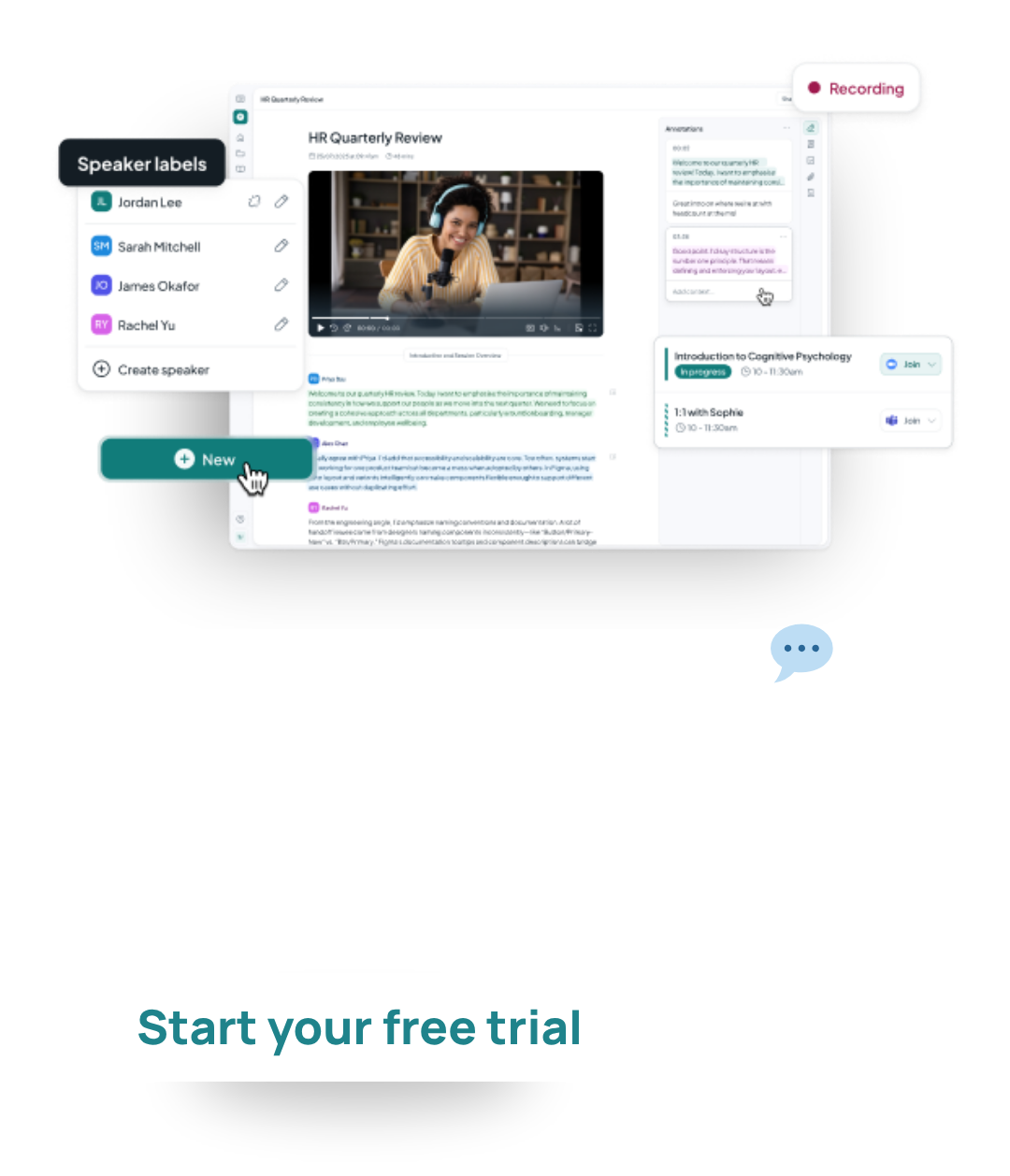
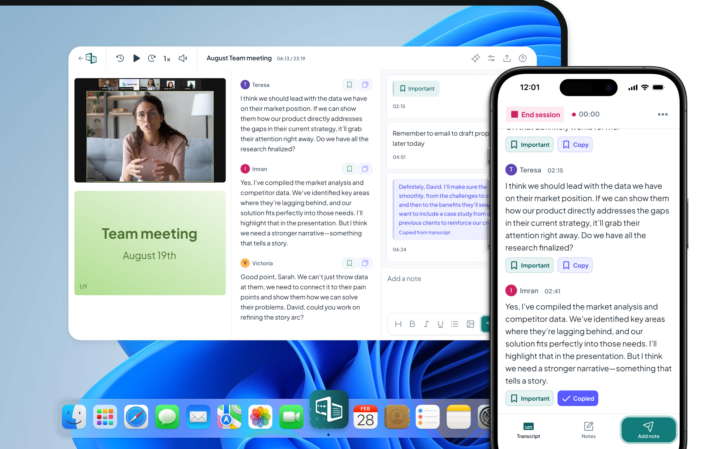
Featuring a set of custom dictionaries with live captioning and note-taking functions, Caption.Ed can add captions instantly to your meetings, lectures or seminars, either in-person or online. You can also add timestamped notes, synced to your transcript, and highlight key information so you never miss out on the important stuff.
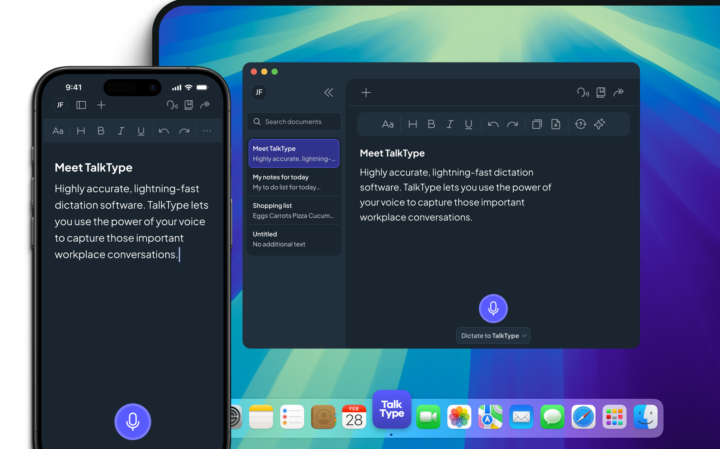
TalkType is highly accurate dictation software built for Windows, Mac, and mobile devices. Dictation software like TalkType can transform the way you work and study. As well as boosting productivity and efficiency, dictation software can provide autonomy to anyone who cannot type using traditional keyboards.
Caption.Ed and TalkType are dynamic AT tools that are transforming outcomes across many workplaces and universities.

Our small but mighty team builds leading-edge software that people love. We pride ourselves on a user-led approach to product design. The voice of the customer shapes what we create and that’s exactly how great assistive tech should be made.
Misophonia is more than just disliking certain sounds. For some individuals, the emotions brought on by it can be so extreme…

Dysgraphia is a lesser-known handwriting difficulty that’s often mixed up with conditions like dyslexia and developmental coordination disorder (DCD). So, how…

There’s a lot of confusion when it comes to understanding ADHD in men. In this helpful guide, we explore different types…